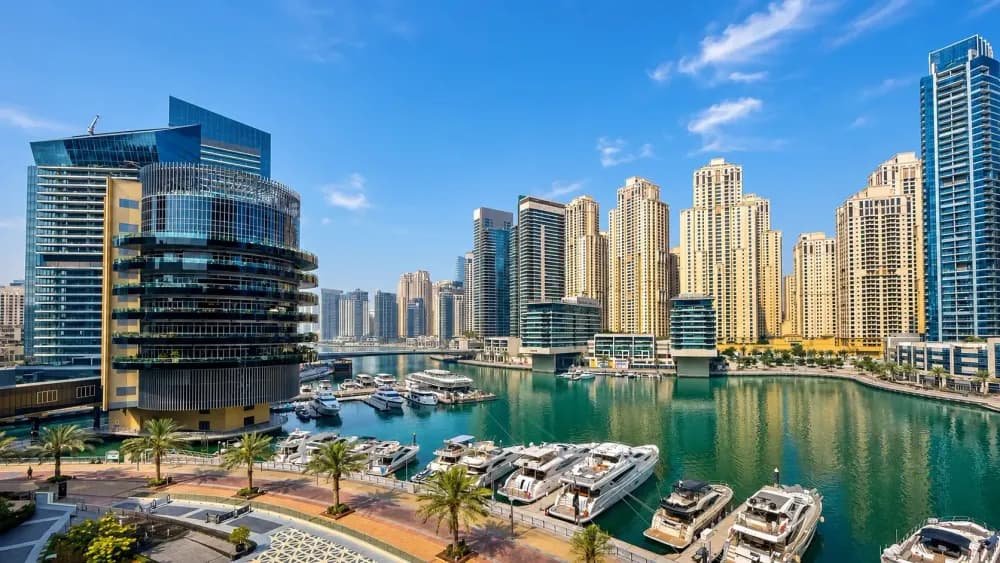
How To Build a Strong Property Portfolio in Dubai ?

Table of Contents
Every few years, someone declares that Dubai's property market has peaked, and every few years, the city simply keeps building on its own momentum. In early 2026 alone, it recorded over 111 billion dirhams in transactions in January, followed by more than 60 billion dirhams in February across nearly 17,000 deals, a jump of 18% year on year, as verified by the Dubai Land Department. For a market that outsiders keep watching cautiously, Dubai has a consistent way of showing up strong. But the real story here isn't about outside opinions. It's about understanding why the fundamentals keep holding and how investors can actually build something lasting on top of them.
The Power of Cash Transactions
Here's something most people don't realize about Dubai real estate: it isn't built on borrowed money. Roughly 87% of property purchases so far in 2026 have been cash deals, with similar numbers, around 83%, holding true through 2024 and 2025 as well. That single number changes the entire risk profile of this market. The 2008 US housing crash wasn't really a property crisis, it was a debt crisis, built on buyers who couldn't hold their positions when pressure hit. Dubai's buyer base looks nothing like that. For anyone building a portfolio here, this means you're adding assets in a market that moves on genuine demand rather than distress, giving every property in your portfolio room to grow steadily.
Using Off-Plan to Build Your Portfolio
A well built portfolio doesn't just happen at handover; it starts with how you enter. Off plan investing, used strategically, is one of the most effective ways to build equity into a portfolio from day one. Before adding any off plan project to your portfolio, a few things are worth checking every time:
- The developer's track record of delivering on time
- Whether too many similar units are coming into that same area at once
- Whether the demand is coming from genuine end-users, not just investors
- The strength of the surrounding community and infrastructure
- The quality of other buyers in the project, not just speculators looking to flip
Portfolios anchored around end user demand tend to hold and compound value, while those built purely around short term flippers rarely add lasting strength. Get this right, and you're often buying in at 25-30% below what the property is expected to be worth once it's ready, meaning every new addition to the portfolio already starts ahead.
Reading Supply the Right Way
Building a portfolio in any city means understanding what's coming into the market, and Dubai gives investors more clarity here than most headline numbers suggest. While 120,000 units are scheduled for handover this year, that number is best read alongside the demand that is absorbing it. A population that crossed 4 million in late 2025 and is growing by over 500 people a day, along with a business landscape where registered companies have more than doubled in five years, means new supply is entering a market with a genuinely expanding base of end users. For a portfolio, this is a strong sign: it points to where demand is deepest, and it's this depth of demand, not the headline supply figure, that should guide where capital gets allocated. Choosing communities backed by this kind of real, growing population is what gives a portfolio its long term strength.
How To Structure Your Portfolio
This is where most investors go wrong: they collect properties instead of building a portfolio. A resilient Dubai portfolio typically rests on three pillars:
-
Growth assets: undervalued areas with strong appreciation potential. These do the heavy lifting over a full cycle.
-
Income assets: properties that generate steady rental cash flow, often in the 6-9% range, tax free.
-
Defensive assets: properties in established, end user favored communities. These hold their value well and can be sold quickly if you ever need to.
The smartest investors don't just buy into these three categories and leave them untouched, they keep track of how each property is performing. When a growth asset has matured and become more of a stable, defensive one, they sell part of it and reinvest in the next growth opportunity. This keeps the portfolio active and working, rather than sitting still.
The Real Driver of Dubai's Growth
None of the cash driven transactions, the off plan opportunity, the demand absorbing new supply, or the three pillar portfolio approach, exists in isolation. It all traces back to one thing: Dubai's real estate strength is a by product of a much bigger economic build out across financial services, technology, tourism, and global trade, one that keeps pulling residents, businesses, and capital into the city. Real estate is simply where that growth becomes visible, and a well built portfolio is how an investor captures it. For anyone thinking long term, the opportunity isn't in reacting to headlines, it's in structuring a portfolio today that's positioned to grow alongside a city that shows no signs of slowing down.
Thinking about your next Dubai property?
Talk to an XRealty specialist — market guidance, shortlists, and honest advice, no obligation.
Frequently Asked Questions
Yes. Dubai combines tax-free rental yields of 6-9%, a currency pegged to the US dollar since 1997, and an economy actively diversifying beyond real estate, all factors that support long-term, sustainable growth for investors.
Around 87% of purchases in 2026 have been cash transactions, with similar levels, around 83%, through 2024 and 2025. So, owners here rarely feel pressure to sell quickly, unlike markets where most buyers depend on loans.
Depending on your goals and stage of investing, a balanced portfolio includes growth assets for appreciation, income assets for steady rental returns, and defensive assets for stability and liquidity.
Strong infrastructure, genuine end-user demand, connectivity, and a track record of steady value appreciation are the key markers of a community suited for long-term portfolio holdings.

Related Articles
 Market Pulse
Dubai's Smart Rental Index Explained: What It Means for Yields in 2026
Understand Dubai’s Smart Rental Index, how it affects rent increases, rental yields, landlords and property investors across Dubai’s real estate market.
 Buyer and Seller Guide
Off Plan, Ready, or Half-Built: The Question Most Dubai Buyers Get Wrong
Off plan, ready or half built? Compare Dubai property options, payment plans, risks, returns and timelines to find the right real estate investment.
 NRI Investment
Dubai vs. Singapore Real Estate 2026: Which is the Better Property Bet?
Dubai or Singapore property in 2026? Compare investment returns, rental yields, taxes, market growth and buyer opportunities before deciding where to invest.