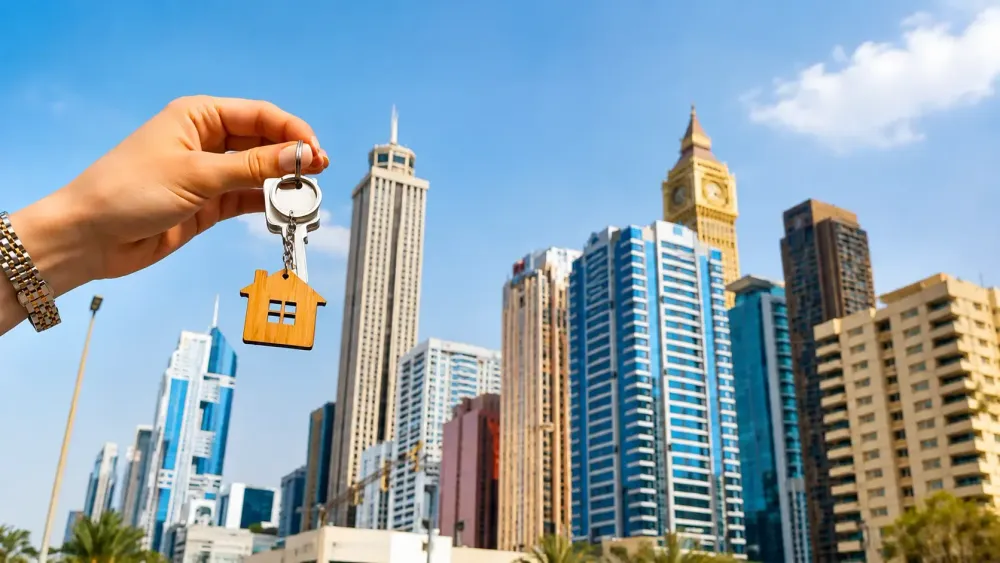
Cash vs Mortgage: How Should You Buy Property in Dubai?

Table of Contents
Dubai’s real estate market attracts two types of investors with different approaches to buying property. Some prefer to pay for their purchases outright, while others are willing to take on real estate loans. Despite the seeming simplicity of owning a property, both methods have their advantages and disadvantages in terms of risks and profitability. In Dubai, more than 270,000 property transactions were reported in 2025, and the price level on average increased by almost 20% year-on-year. Thus, many investors are now looking to understand which of these two strategies is more profitable.
The Case for Paying in Cash
Cash is still the go-to option for a large proportion of Dubai’s buyers, especially foreign investors and high-net-worth individuals. The appeal is straightforward:
- No interest burden: You will never pay interest on a mortgage, which can add up over the life of the loan.
- Quick closings: Cash deals can be done quickly without waiting for bank valuations or approvals.
- More bargaining power: Cash buyers are often offered a discount by sellers and developers because it removes the risk of financing from them.
- Higher net rental yield: All the rental income is profit from day 1 with no EMI eating into returns.
The compromise? All your money, now, in one spot. That money could have been working somewhere else. In other investments. A business. Or just sitting liquid for when you need it. Additionally, since a significant portion of your capital is tied to this one property, you are immediately affected if the market slows down.
Why Buyers Still Choose a Mortgage
There are several reasons why taking a mortgage to finance real estate purchase in Dubai could be a preferred option for some buyers despite the availability of an opportunity to buy outright. Some of the reasons why individuals prefer a mortgage to finance their purchase include:
-
It keeps your money free: By making mortgage payments over time, purchasers can save some of their cash rather than making a significant upfront investment in a home. Therefore, having additional money on hand is a compelling reason to take out a mortgage instead of buying the house outright.
-
It spreads out the risk: It is a good way to limit the financial risk associated with a large purchase. By not depositing all of your available funds, you have a more substantial amount of cash on hand, as well as a better overall financial position, compared to if you had put your life savings into a home.
-
Payments can feel like rent: Making monthly payments on a home that one owns can be a good alternative to paying rent. Mortgages often allow the borrowers to pay roughly the same amount per month as they would have been required to pay as renters in a similar property.
-
Adds a layer of financial structure: The loan amount is approved considering one’s income. Having a mortgage ensures that an individual does not overextend themselves since the bank that approves the mortgage will consider the income of the borrower. This ensures that mortgage payments are made, and the risks of defaulting are mitigated.
The main benefits of opting for this method of payment are that it allows buyers to make a smart investment, purchase a bigger or more desirable property by only putting roughly around 20% (less or more depending upon the property type, price and buyer’s residency status) of their savings towards the down payment and have the remaining as backup funds or the budget to invest elsewhere.
Which Route Actually Fits Your Situation
It depends on your financial state and what you intend to do with the property.
-
If you are buying a property for investment and intend to sell it in the short term, paying cash for the purchase is probably better. A cash deal is quicker to complete, and since there is no mortgage payment tied to it, you make more profit from renting out the property.
-
Whereas if you are looking to buy a property to live in, a mortgage is probably the best route to go, as it can allow you to save some money for other investments or expenditures and let you pay it off as you live in the property.
The Bottom Line
There is no right or wrong answer here. It depends on many factors, including how much you want to save, how much risk you can tolerate, and how long you plan to keep the asset. The key is to set priorities. Compare both options based on how much it will cost you and the expenses associated with each. Taking a little time to weigh the real numbers can make the decision a lot clearer.
Thinking about your next Dubai property?
Talk to an XRealty specialist — market guidance, shortlists, and honest advice, no obligation.
Frequently Asked Questions
Neither option is universally better. Buying real estate with cash is better for investors who want to make a quick profit and have a strong bargaining position. Mortgages are good for those who want to settle in Dubai and do not want to tie up their money.
Cash buyers can often negotiate the best price as they take away the risk of financing for the seller, as well as completing the sale quickly, but whether there is an actual discount depends on a number of factors including the project itself, the seller, and the negotiation.
A bank will typically ask for a specific amount of monthly income (at least AED 10,000 per month (salaried) or AED 25,000 per month (self-employed)) for qualifying for a mortgage loan, and the sum of all the debts that the borrower is supposed to pay should not surpass a certain percentage of the income.
Yes. Non-residents can get a mortgage to purchase property in Dubai, as the banks in the UAE provide appropriate loans. The down payment is usually higher than that of the residents in the UAE.

Related Articles
 Invest In Dubai
Why the World's Richest Are Choosing Dubai Over Every Other City
Discover why the world’s wealthiest investors and entrepreneurs are choosing Dubai for luxury real estate, tax advantages, global connectivity, safety and long term growth.
 Lifestyle and Community
Yas Island Abu Dhabi: The Complete Guide to Lifestyle, Property and Investment (2026)
Explore Yas Island, Abu Dhabi: top communities like Water's Edge, Mayan, Noya and Yas Acres, plus rents, schools, attractions and Golden Visa tips.
 Invest In Dubai
Where to Buy in Dubai in 2026: Five Areas for Different Buyer Priorities
A practical guide to five Dubai locations for end users, long term growth buyers and income focused investors.