
Dubai Rental Yields vs Capital Appreciation 2026: The Total Return Framework
Compare Dubai rental yields and capital appreciation in 2026. Learn how yield, growth and liquidity shape total returns across communities.
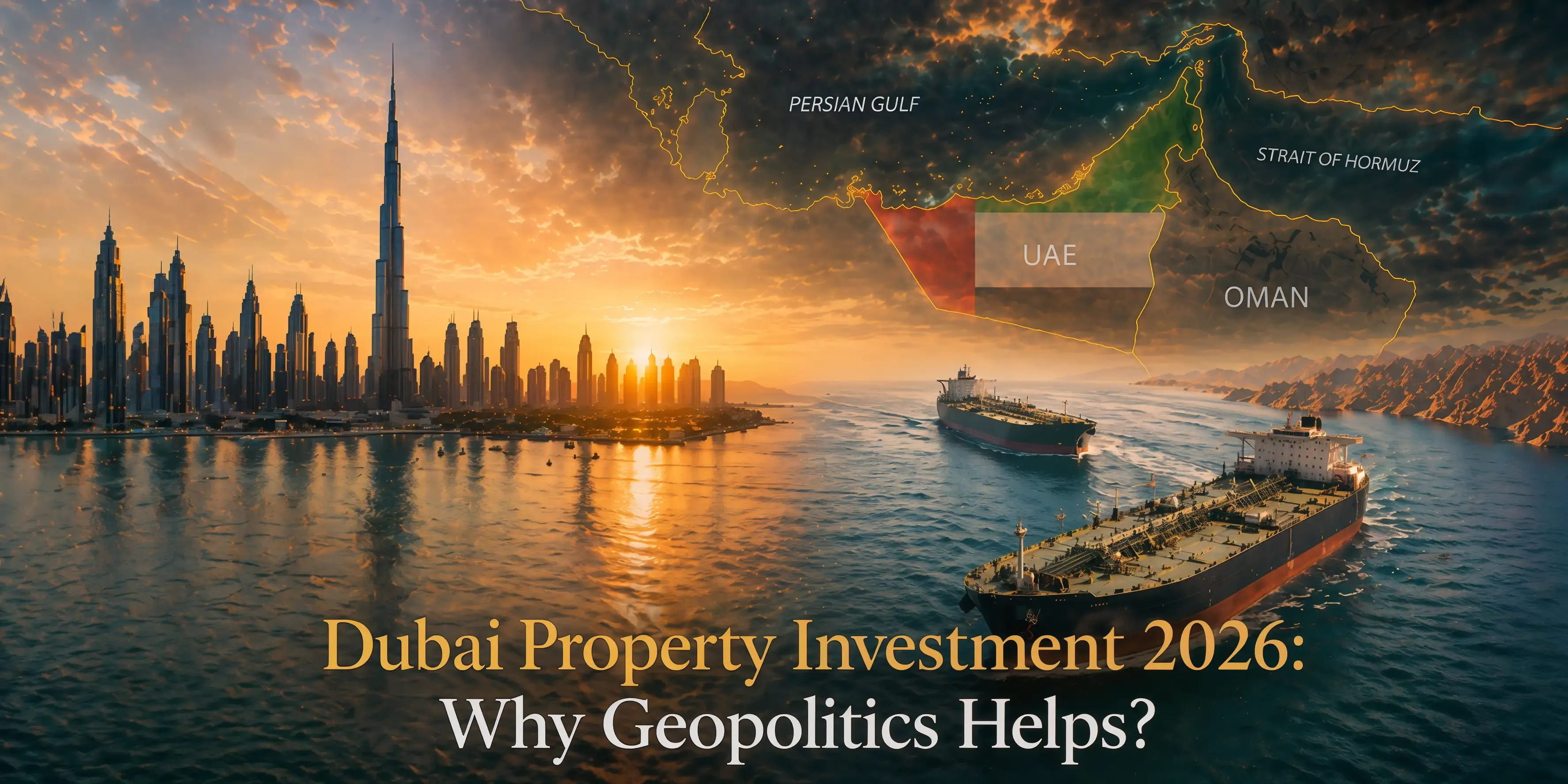
If you have been searching for scenes of collapse in Dubai, you will not find them. Flights are landing. Offices are open. Malls are full. Roads are moving. The Gulf is navigating real geopolitical pressure, but tension in a region does not mean every city inside it has stopped working. International media has access to Tehran, Tel Aviv, Beirut, Manama and Doha, if Dubai had collapsed, footage would already be on every front page. Normal life does not sell on prime time, which is why a small fire outside one hotel becomes a global headline while genuinely consequential stories receive a fraction of the airtime.
Clients and investors who have committed millions of dollars into Dubai real estate- have asked me two questions, in this order: Are you safe? and What is actually happening? They are not looking for drama. They are looking for clarity.
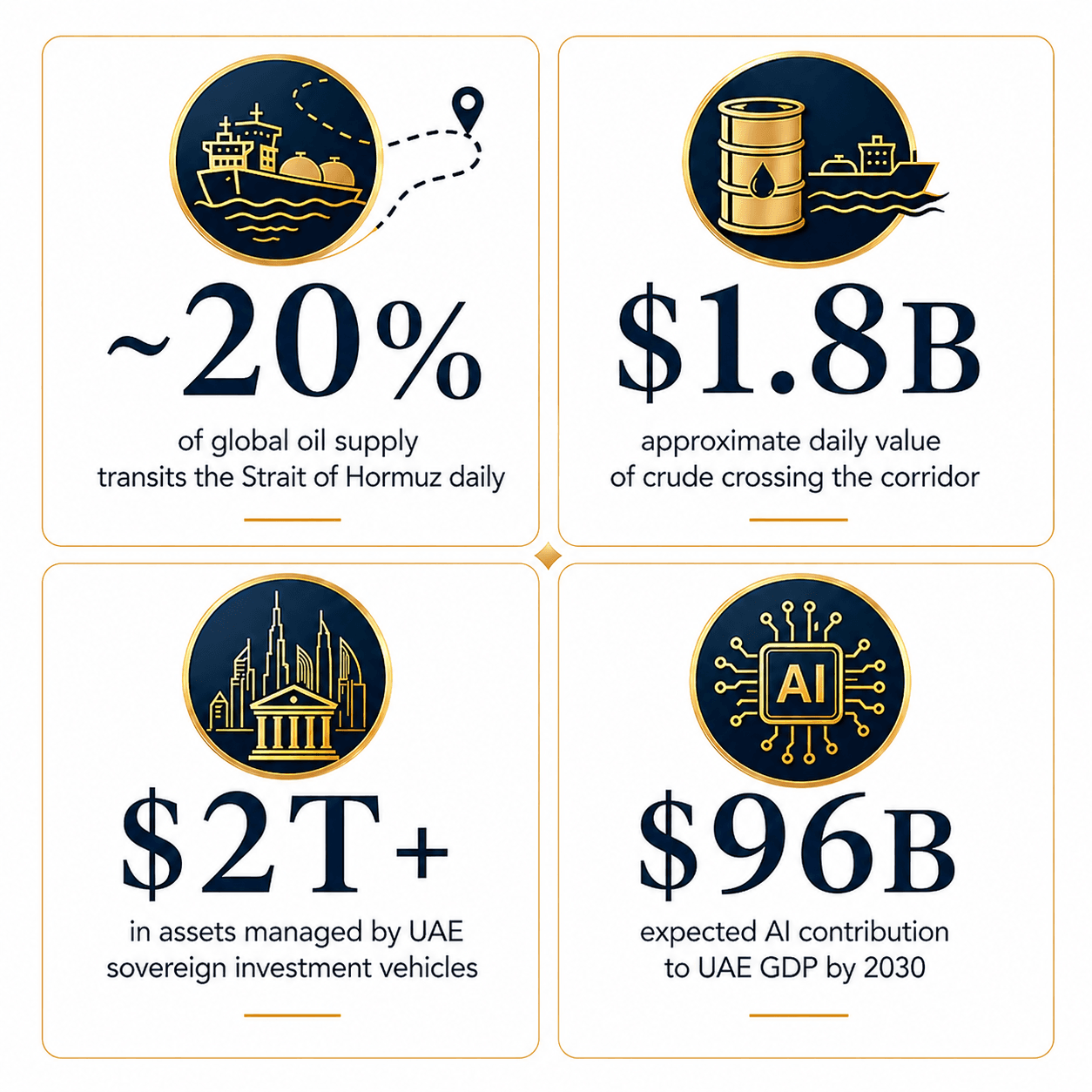
Roughly twenty million barrels of oil, close to twenty percent of global supply, pass through the Strait of Hormuz every day, alongside a major share of the world’s LNG. A serious disruption does not stay regional; it moves through energy prices, inflation, currencies and capital allocation decisions made far from the Gulf.
Which is why Hormuz tends to remain open. A prolonged closure does not work for any party at the table. The same logic applies to wars and tariff cycles: economic cost, political fatigue and diplomatic reality eventually push every conflict toward negotiation. The loudest period of a crisis is rarely the period in which long-term capital is destroyed, it is when long-term capital quietly reprices its options.
Whenever the global system becomes unstable, capital does something predictable. It rotates toward jurisdictions where institutions still work. European investors contending with inflation, Indian capital that already treats Dubai as a second home, North American funds, Russian and Chinese capital, GCC family offices- all of it lands here. That is the structural difference between Dubai and most global real estate markets in a comparable cycle.
Four points for anyone asking why invest in Dubai property. First, diversification: the economy is built on trade, finance, aviation, logistics, tourism, technology and real estate - not oil. Second, capital depth: UAE sovereign vehicles (ADIA, Mubadala, ADQ, EIA, ICD) collectively manage more than $2 trillion for a population of ~11 million. Third, security: multi-layered defence (THAAD, PAC-3, integrated radar) a capability only a handful of countries operate. Fourth, structure: zero personal income tax, zero capital gains tax on real estate, freehold ownership for foreign nationals and RERA-regulated escrow. Those are not perks- they are the architecture that drives the comparison with London, Singapore and New York.
Periods of uncertainty are uncomfortable for speculators and useful for owners. When markets slow, hesitant capital steps back, speculative flippers fade, and genuine sellers appear. If you have liquidity today, the objective is not panic, it is patience.
Quality first: The asset you buy this year should still earn its place in your portfolio in 2030.
Lean toward scarcity: Beachfront, branded residences and master-planned waterfront properties from tier-one developers: Emaar Properties, Nakheel Properties, Sobha- tend to outperform when the cycle turns.
Off plan or ready-to-move? Both: Off plan properties for capital growth, ready to move properties for yield. The mix depends on your liquidity and horizon, not on what is marketed loudest.
Filter the noise. The deals that matter rarely arrive in a WhatsApp forward.
Having watched eleven cycles inside this city and advised investors through four major global shocks, my conclusion is uncomplicated. The Dubai investors imagine from outside, especially when the feed is loud, looks very little like the Dubai residents experience every day. The institutions function. The capital keeps arriving. The diversification is no longer a slogan, it is in the GDP data.
Do not trade your decade-long thesis for a week of headlines. The Dubai property investment case in 2026 is not built on optimism- it is built on architecture. Buy quality. Buy in supply constrained locations. Hold with conviction. If you would like to discuss your portfolio, I am reachable through Xperience Realty. Bring your questions; I will bring the data.
Archana Bhan is Associate Director & Portfolio Manager at Xperience Realty, Dubai. RERA-certified, law graduate, 11+ years advising HNI and UHNI clients on Dubai property investment across Emaar Properties, Nakheel Properties and other tier one developers.
Yes. Institutions and multi-layered defence continue to function normally, and capital from Europe, India, North America and Asia continues to enter the city.
Zero income tax, zero capital gains tax, freehold ownership, RERA escrow, and rental yields two to three times higher. The comparison is structural, not stylistic.
Both have a role- off plan with Emaar Properties and Nakheel Properties for capital growth; ready to move for yield.
Compare Dubai rental yields and capital appreciation in 2026. Learn how yield, growth and liquidity shape total returns across communities.
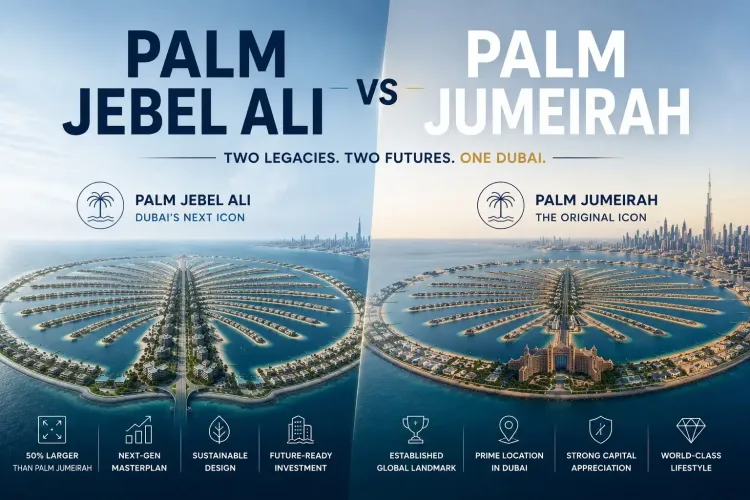
Palm Jebel Ali vs Palm Jumeirah 2026: which is the better buy? Villa pricing from AED 22M, frond ROI, and the trade Dubai's UHNWI buyers are making now.
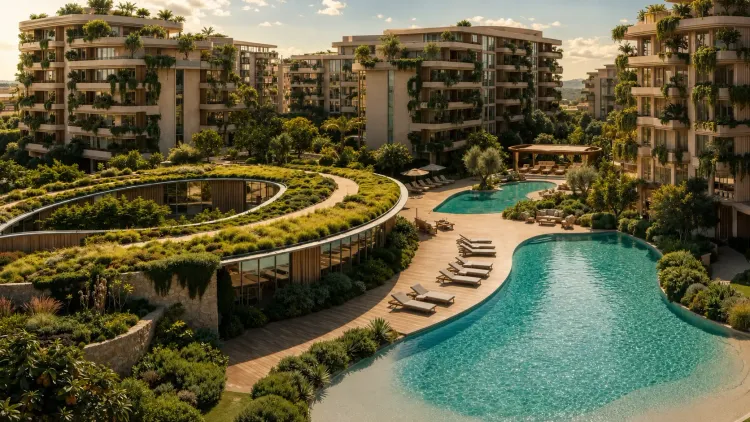
Arancia The Yards by Beyond launches in City of Arabia from AED 1.1M, with a 40/60 plan and Q1 2029 handover. Explore prices and investment potential.