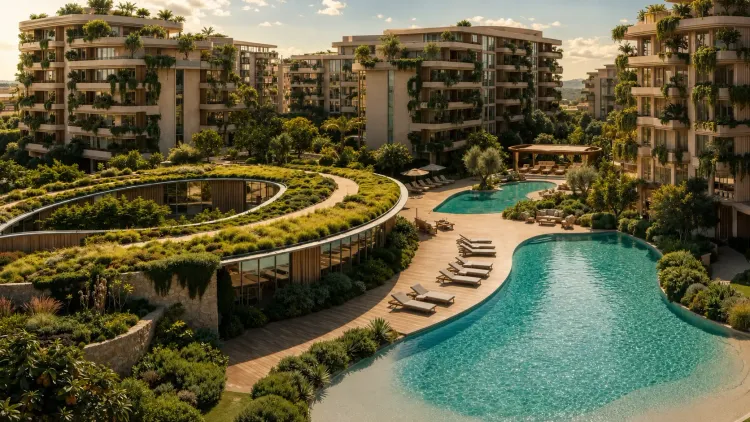
Arancia at The Yards: Beyond’s First Move Inland
Arancia The Yards by Beyond launches in City of Arabia from AED 1.1M, with a 40/60 plan and Q1 2029 handover. Explore prices and investment potential.
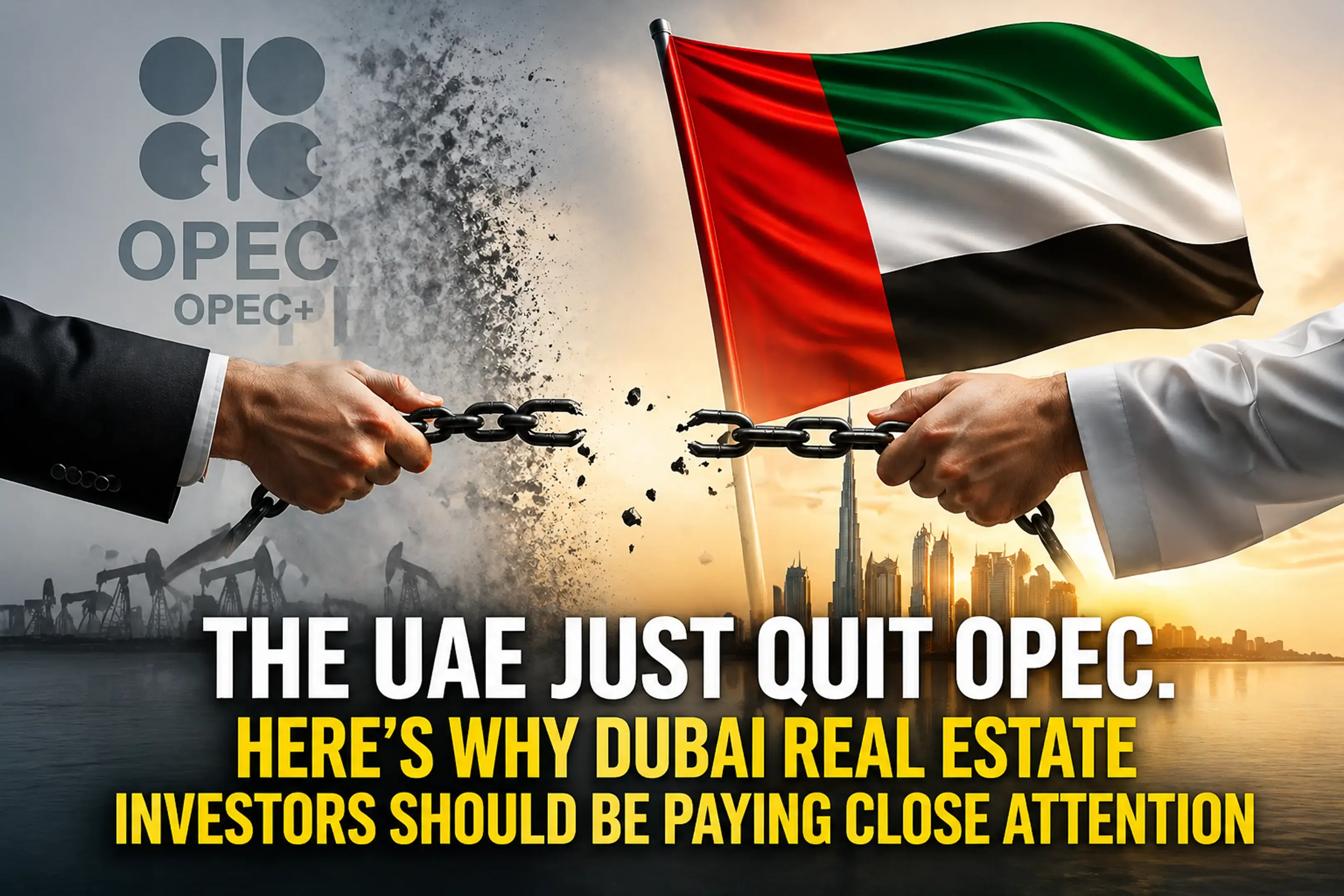

Effective 1 May 2026, the UAE has formally exited OPEC and the broader OPEC+ alliance, ending a relationship that began when Abu Dhabi joined the cartel in 1967. The announcement landed like a depth charge. Brent crude climbed 3.4% to $111.67 a barrel. Analysts scrambled. Saudi Arabia absorbed another blow to its ability to lead OPEC as a unified force.
But for Dubai property investors, first-time buyers, long-term HNIs, and everyone deciding right now whether to pull the trigger on a purchase - the more important question isn't about oil. It's about what this move tells us about where UAE capital is going next. Follow that capital, and it points directly at Dubai real estate.
The official language was diplomatic. 'The time has come to focus our efforts on what our national interest dictates,' the UAE said in a statement carried by state news agency WAM. Beneath the courtesy, the arithmetic was blunt.
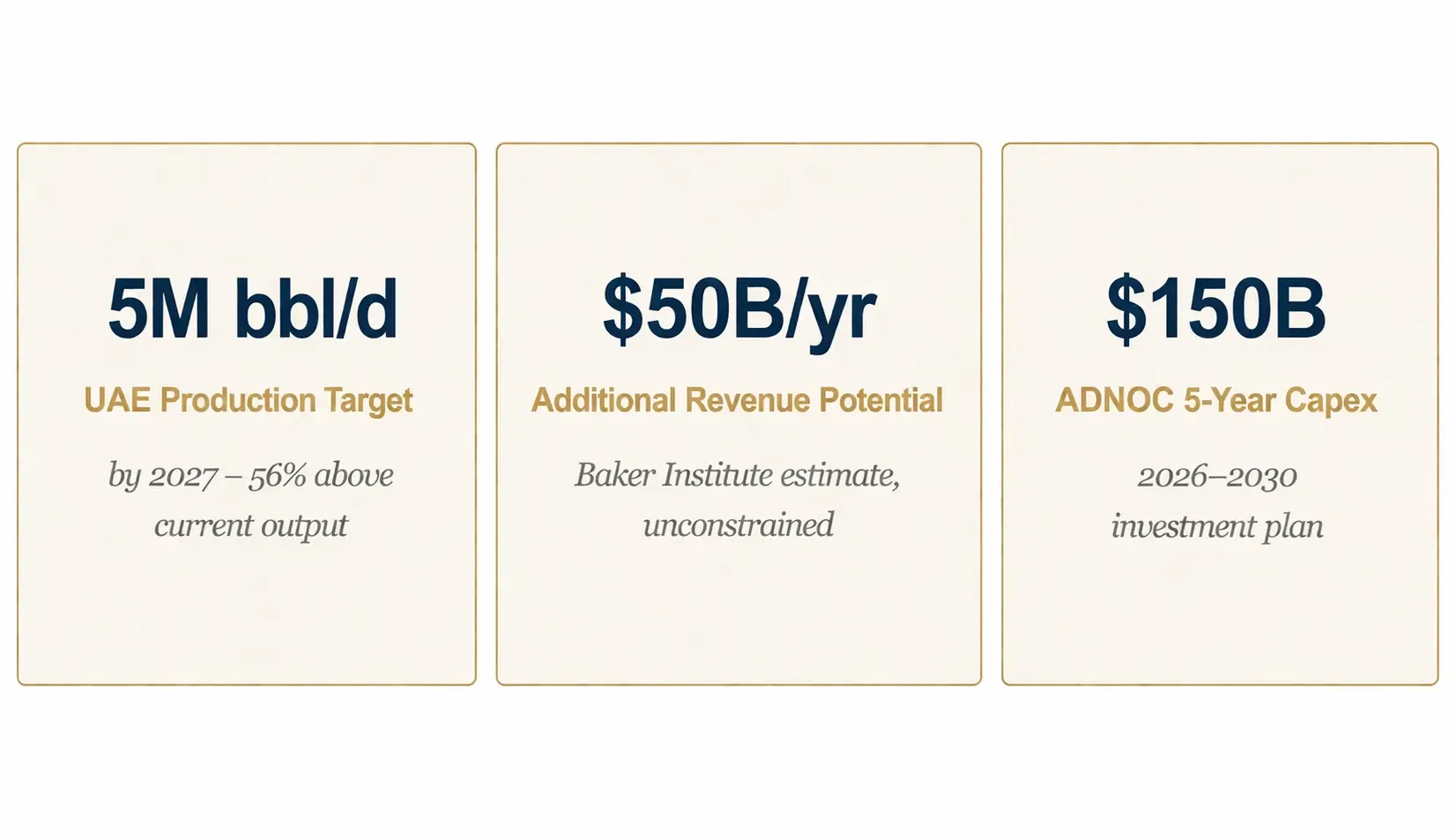
The UAE has publicly targeted a production ceiling of 5 million barrels per day by 2027, representing a 56% increase from its current output of approximately 3.2 million barrels per day. OPEC and OPEC+ quota frameworks structurally prevented this expansion, creating a direct conflict between national economic ambitions and cartel obligations.
The UAE 'can increase production rapidly,' says Jorge Leon, head of geopolitical analysis at Rystad Energy. 'And they will just act as a normal non-OPEC producer, where they just pump as much as they can.'
The Strait of Hormuz, currently disrupted by Iranian attacks and a US blockade during the US-Israel war on Iran means new production won't reach export markets immediately. But that's a logistics problem with a timeline, not a structural barrier. When the strait reopens, the UAE moves. And when it does, the fiscal consequences are large enough to reshape domestic investment priorities at scale.
Most financial commentary on the OPEC exit focuses on oil prices. The more consequential story is the reinvestment machine already running.
ADNOC has approved a $150 billion capital spending plan for 2026 to 2030, approved at board level with UAE President Sheikh Mohamed bin Zayed Al Nahyan chairing the meeting. The investment is designed to sustain current operations, accelerate future growth, and reinforce the UAE's position as a global energy leader.
But the plan isn't purely upstream. ADNOC said it plans to inject AED 220 billion into the UAE economy over the next five years through its local value programme, supporting domestic manufacturing and SMEs. Its international investment arm, XRG, has increased in value from $80 billion to $151 billion since its launch, targeting chemicals, natural gas, and renewables. ADNOC's listed companies are targeting AED 158 billion in dividends through to 2030 - capital that flows back into UAE markets, into institutional portfolios, and into the financial ecosystem that Dubai's property market sits within.
The IMF projects approximately 4% GDP growth in 2026, supported by ADNOC expansion, tourism growth, real estate demand, and technology investments. Real estate is explicitly named alongside oil as a pillar of UAE economic growth. That's not coincidence. It's structure.
The UAE's economic model has always treated real estate, tourism, and financial services as the civilian infrastructure that oil revenues are meant to build and sustain. The OPEC exit removes the ceiling on how much oil revenue flows into that model.
The connection between energy revenues and Dubai real estate isn't metaphorical. It runs through employment.
When ADNOC's $150 billion capex plan moves through the UAE economy, it does so through contractor payments, engineering fees, logistics spend, workforce salaries, and government surpluses redirected into sovereign fund portfolios. ADNOC's In-Country Value programme has contributed $83.7 billion to the UAE economy since 2018, with a new target to drive an additional $60 billion over the next five years. That programme requires energy-sector contractors to demonstrate spending within the UAE - which means jobs, local offices, and residential demand.
A production ramp to 5 million barrels per day - and the stated ambition to reach 6 million if markets require it - doesn't happen with existing headcount. It requires workforce expansion across field operations, refining, logistics, and the professional services ecosystem surrounding it: legal, financial, engineering, and technology. Those positions sit predominantly in Dubai and Abu Dhabi. Those people rent, and then they buy.
The UAE's digital economy aims to contribute 20% of non-oil GDP, up from approximately 10% currently. Every percentage point of that growth requires physical infrastructure - offices, data centres, and the residential and retail ecosystem that surrounds knowledge-sector clusters. When companies expand operations, demand for workspace and residential property follows. The OPEC exit amplifies all of it.
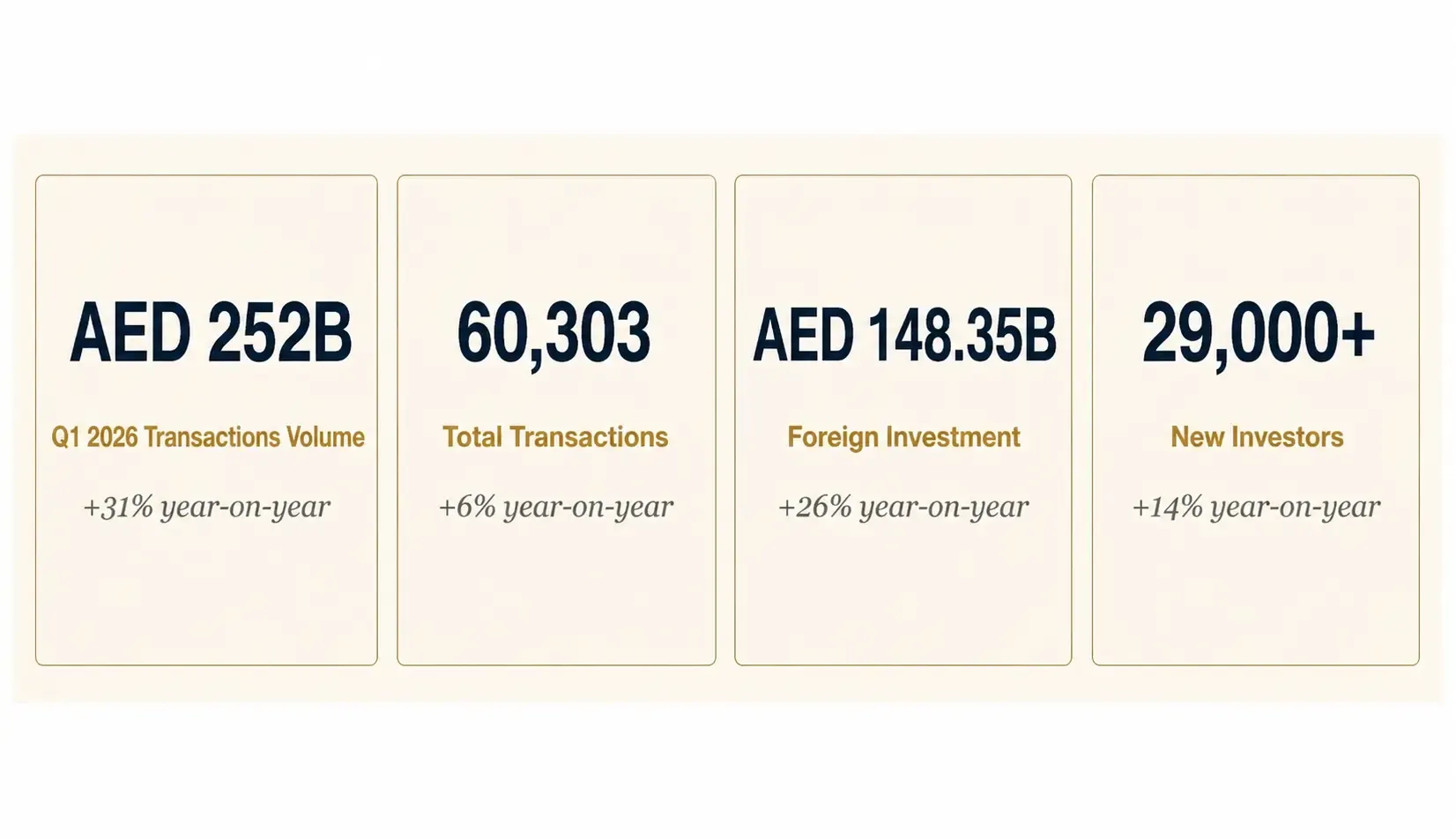
Q1 2026 data compiled before the OPEC announcement - shows AED 252 billion in transaction volume (+31% year-on-year), 60,303 transactions (+6%), AED 148.35 billion in foreign investment (+26%), and over 29,000 new investors entering the market (+14%).
That expansion is happening without the OPEC exit's economic effects in play. The removal of production constraints adds a structural demand layer onto a market that is already outperforming its own recent highs.
Vacancy rates in Dubai's residential rental market sit at 5–7%. That's a structurally tight market. Strong yields, ranging from 5% to 6.8% in established communities are supported by demand that isn't speculative. It's professional workforce demand. And that workforce is about to get larger.
This section isn't for those still debating whether Dubai is a good market. The Q1 2026 data closed that debate. This is for buyers who accept the case and are deciding when.
The entry-level products that still offer accessible price points mid-market apartments in Dubai Hills, off-plan units in MBR City, two-bedroom apartments in Business Bay - face a risk that has nothing to do with geopolitics. The risk is straightforward: each successive quarter of strong transaction data narrows the gap between what a first-time buyer can afford and what the market will accept.
The AED-USD peg is worth naming explicitly. Unlike real estate markets in Europe, South Asia, or Southeast Asia, a Dubai property investment carries no currency risk relative to dollar-denominated wealth. For Indian HNI buyers - consistently the single largest buyer cohort in the Dubai market - rupee depreciation against the dollar does not erode the asset's dollar-denominated value. That's a meaningful structural advantage that most commentary underweights.
For a buyer who cannot yet commit to a primary residence, a rental-yielding investment property in the AED 1.2–2.5 million range in an established community offers both a yield floor and a capital appreciation kicker directly tied to the structural demand growth the OPEC exit reinforces. The entry barrier today is lower than it will be in 18 months. That's not a sales pitch. It's what the trajectory of AED 252 billion in Q1 transaction volume implies.
For the investor who holds Dubai real estate - particularly villas and premium apartments - the OPEC exit reconfigures the demand picture in one specific way: it makes the senior professional inflow more durable.
A UAE freed from production quotas attracts more upstream partnerships, more energy-sector multinationals, more engineering and services firms and more of the ancillary financial and legal infrastructure that follows energy capital. All of that translates into more senior professionals relocating to Dubai on long-term packages the demographic that drives demand for villa communities in Dubai for Dubai Hills, Emirates Hills and Palm Jumeirah.
The supply constraint in the villa segment remains permanent. The villa market is 18% of Dubai's residential supply but generates 41% of residential transaction revenue. Emaar cannot build more golf villas in Dubai Hills Estate because there is no more golf-front land in Dubai Hills Estate. Additional demand from energy sector expansion cannot be absorbed by increasing villa supply. It gets absorbed by price.
The window between now and when the Strait of Hormuz reopens and UAE production flows freely is exactly the kind of window that long-term investors look back on as the entry point they wish they hadn't missed.
For existing HNI holders, the current correction, a 6–8% retracement in growth rate, not a collapse in asset value represents an averaging opportunity rather than a warning. The structural demand drivers that will push premium product values higher are adding a new layer, not replacing an old one.
There's a narrative in some corners of global financial media that the OPEC exit, coming during regional tension, with the Strait of Hormuz under pressure signals UAE vulnerability. The data suggests the opposite.
Despite regional tensions, the Dubai real estate market is growing, capital inflows are increasing, and investor confidence is measurably stronger, not weaker. Dubai has a consistent pattern of strengthening its position during periods of global uncertainty. Capital that is nervous about exposure elsewhere finds its way here.
The UAE's decision to exit OPEC is explicitly a pivot toward Washington, not away from it. As Fortune reported, Abu Dhabi is positioning itself as a full partner in US regional strategy. That alignment has concrete implications: institutional money that was cautious about UAE exposure given OPEC membership and Saudi political dynamics now faces a different calculus. The UAE is a USD-pegged economy, aligned with US strategic interests, backed by a $150 billion investment programme and an uncapped oil production mandate.
The UAE's top 50 brands increased in value by 17% year-on-year to USD 104.5 billion in 2026, according to Brand Finance, supported by continued growth across oil and gas, banking, telecoms, real estate, and manufacturing. That's an economy adding brand value at 17% annually across every major sector simultaneously. The non-oil economy is expanding by over 4.5% annually. Real estate is growing. Financial services is growing. Technology is growing. And oil is growing without a quota ceiling. When four engines run simultaneously in a small, well-governed economy, the compounding effect is not subtle.
I've spent 15 years advising investors in two of the world's most dynamic real estate markets. I've watched buyers wait through 2012, through 2020, and through early 2024, holding out for a moment of clarity that never arrives cleanly.
The UAE's OPEC exit is not a cause for alarm. It's a declaration of economic ambition: a $530 billion economy that has just freed its largest revenue source from a six-decade production constraint, backed by a $150 billion investment plan, a 4% GDP growth forecast, and a residential market that printed AED 252 billion in Q1 2026 transaction volume. That combination does not reward sitting on the sidelines.
For first-time buyers, the entry window is narrowing. The structural demand drivers that will push mid-market prices higher are already in motion, and the OPEC exit adds a new layer of momentum that the Q1 data doesn't yet reflect.
For existing HNI holders, the current correction is a retracement, not a reversal. The long-term capital case for Dubai apartments and premium villa segments has just become structurally stronger - not because of a narrative, but because the supply constraint is permanent and the demand pipeline has just expanded.
The moment when the news is loudest and sentiment most uncertain is historically when the most durable positions get established.
This is that moment.
Arancia The Yards by Beyond launches in City of Arabia from AED 1.1M, with a 40/60 plan and Q1 2029 handover. Explore prices and investment potential.
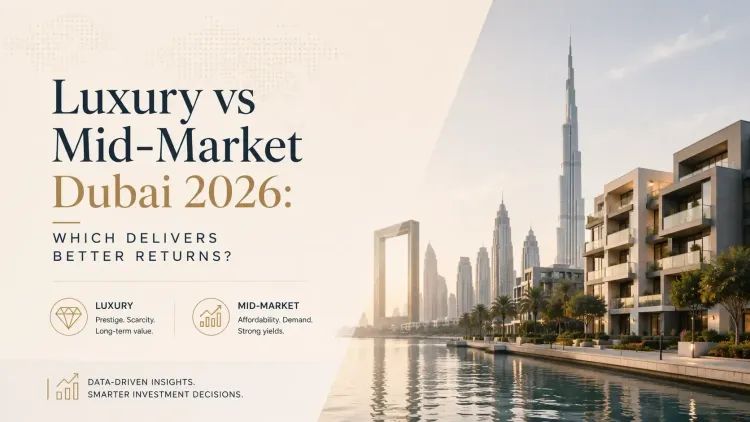
Dubai property investment 2026: luxury vs mid market analysis covering rental yields, capital appreciation, villa supply, and risk-adjusted returns for HNW investors.
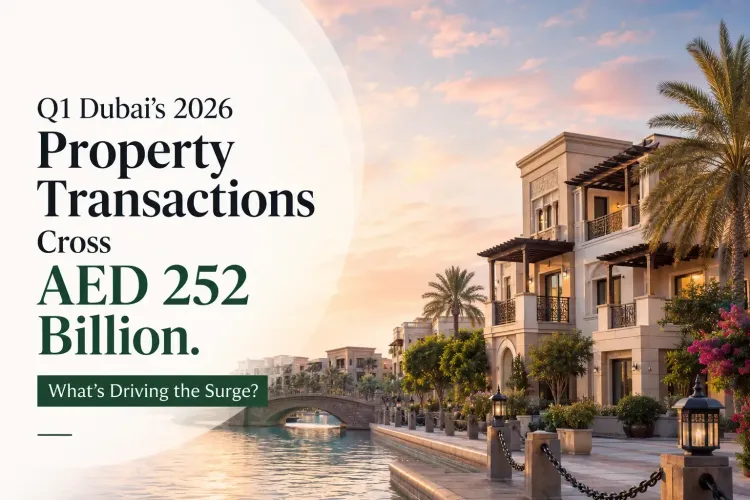
Dubai’s property market continues its upward trajectory, crossing AED 252 billion in Q1 2026 transactions. Explore the latest market insights and opportunities with Xperience Realty.