How Indian Developers and Institutional Investors Can Enter Dubai's Land Market in 2026
Indian developers and institutional investors ready to enter Dubai's land market in 2026, Explore freehold plot zones, entry structures and legal frameworks.

When UBS released its 2025 Global Real Estate Bubble Index, headlines quickly followed. Dubai, the report suggested, had entered “elevated bubble risk” territory, placing it alongside markets like Los Angeles, Amsterdam, and Geneva. For many observers, that sounded like a warning bell.
Yet, on the ground, the picture looks very different. Dubai’s real estate market is evolving, not overheating. Beneath the surface of sharp price gains lies a deeper shift: one driven by population growth, investor confidence, and the city’s transformation into a global center for wealth, business, and innovation.
The UBS index evaluates housing markets based on factors like price-to-income ratios, mortgage growth, and affordability. In cities where these stretch too far apart, UBS flags a potential “bubble.”
Dubai’s rapid rise over the past two years, with double-digit price gains, strong luxury demand, and record sales, naturally attracted that attention. But context matters. Unlike previous cycles, today’s growth is underpinned by real fundamentals.
Population growth is the most telling. Dubai surpassed 4 million residents in 2025, a milestone initially forecast for 2026. This expansion is being fueled by long-term visa programs, corporate relocations, and new business setups, over 50,000 licenses were issued in 2025 alone. Each new resident adds to end-user housing demand, creating depth that speculative markets often lack.
Dubai’s property market today is anchored by five key strengths that set it apart from cities flagged as at-risk:
The buyer base has matured. End-users, long-term residents, and global investors looking for stability now dominate transactions. Cash purchases remain high, reducing exposure to leverage-driven volatility.
While over 40,000 new homes are expected to be delivered in 2026, this growth aligns with population increases. Developers are taking a disciplined approach, releasing projects in phases to match real demand and ensure long-term market balance.
Regulation has evolved significantly. The Dubai Land Department and RERA have tightened escrow laws, introduced digital verification systems, and increased accountability at every stage of development. The result: investor confidence at record levels.
Buyers from the UK, India, China, Europe, and the GCC are all active in the market. This geographic spread shields Dubai from regional shocks and strengthens resilience through cycles.
Dubai’s real estate growth goes beyond construction, it’s built on an ecosystem of safety, connectivity, taxation, and infrastructure. Policies like the Golden Visa and clear crypto regulations continue to make the city a natural choice for living, investing, and building businesses.
After two years of rapid growth, the market is now entering a phase of healthy consolidation; prices are expected to hold steady as conditions normalize. In prime and mid-luxury segments, rental yields remain healthy, and capital appreciation is steady rather than speculative. Apartment prices are stabilizing in mature areas, while villas and low-density projects continue to attract premium valuations.
Developers are also pivoting toward quality over quantity. New masterplans like Palm Jebel Ali and The Oasis by Emaar reflect a shift toward sustainable, long-hold investments rather than short-term speculation. Branded residences and lifestyle-led communities are setting higher standards for design, amenities, and ownership experience.
The result is a more balanced ecosystem: one where price growth aligns with tangible value.
UBS’ model mainly compares how quickly prices rise with income and rent trends; but this approach often misses the unique factors shaping Dubai’s market. Dubai differs from most global cities in several critical ways:
High cash ownership: About 75-80% of property transactions are completed without mortgages, meaning limited exposure to rate shocks.
Flexible policy environment: The absence of capital gains and inheritance tax continues to make Dubai one of the most attractive places for long-term wealth growth; it allows investors to reinvest and build portfolios without erosion through taxation.
Institutional maturity: Dubai’s real estate has become a globally recognized asset class, with REITs, fractional platforms, and international developers participating at scale.
Where other cities restrict foreign investment or impose heavy taxation, Dubai continues to welcome capital transparently and efficiently.

As the market matures, investors can anticipate more measured returns, with stability replacing the steep climbs of 2023–2024. The luxury and ultra-luxury sectors will likely remain strong, supported by limited supply and global wealth migration.
Mid-market apartments may see slower appreciation, but demand from new residents will sustain healthy absorption rates. Meanwhile, new communities in Dubai South, Dubai Hills Estate and waterfront real estate will continue expanding Dubai’s footprint, creating opportunities for both end-users and portfolio investors. What’s unfolding isn’t a warning sign, it’s a sign of balance. Dubai’s growth curve is flattening into a sustainable trajectory, with fundamentals supporting long-term value rather than volatility.
Labels like “bubble risk” often miss the nuances that make Dubai different. The city’s evolution over the past decade has been deliberate: tightening regulation, diversifying its economy and aligning growth with real demand.
For investors, the opportunity lies not in short-term speculation but in strategic positioning. The next phase of Dubai real estate will reward those who prioritize quality, liquidity and longevity. As 2026 approaches, one thing is clear: Dubai’s market isn’t inflated, it’s maturing. And for those looking beyond headlines, that maturity represents strength not fragility.
No. Despite UBS’s “elevated bubble risk” label, Dubai’s growth is driven by real demand, strong population growth and high cash ownership making it a sustainable market.
Dubai’s property sector is built on transparency, low leverage, and global demand. Strong RERA regulation and tax free policies ensure long-term stability.
Price growth stems from genuine end user demand, population expansion beyond 4 million and high-quality projects like The Oasis and Palm Jebel Ali.
Yes. With strong rental yields, transparent laws and low taxes, Dubai remains one of the safest global real estate investment destinations.
Investors should prioritise branded residences, sustainable masterplans and Golden Visa eligible properties for long-term value.
Indian developers and institutional investors ready to enter Dubai's land market in 2026, Explore freehold plot zones, entry structures and legal frameworks.
Dubai real estate pipeline data through 2030, understand where supply is concentrated and what it means for your investment strategy.
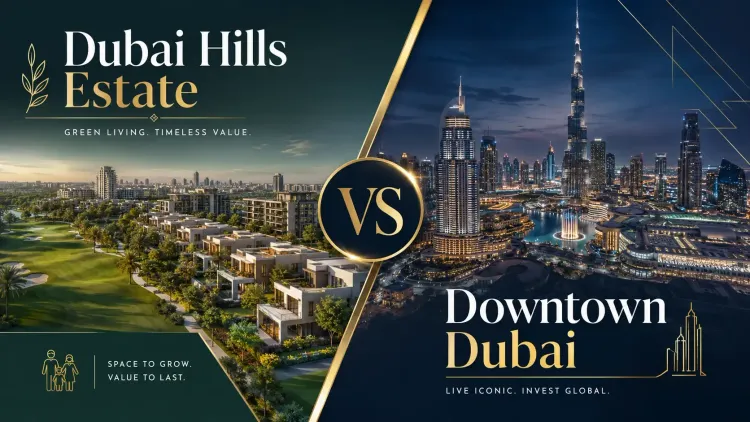
Downtown Dubai vs Dubai Hills Estate in 2026, the capital appreciation data, buyer pool shifts and why one community now wins for first time buyers.