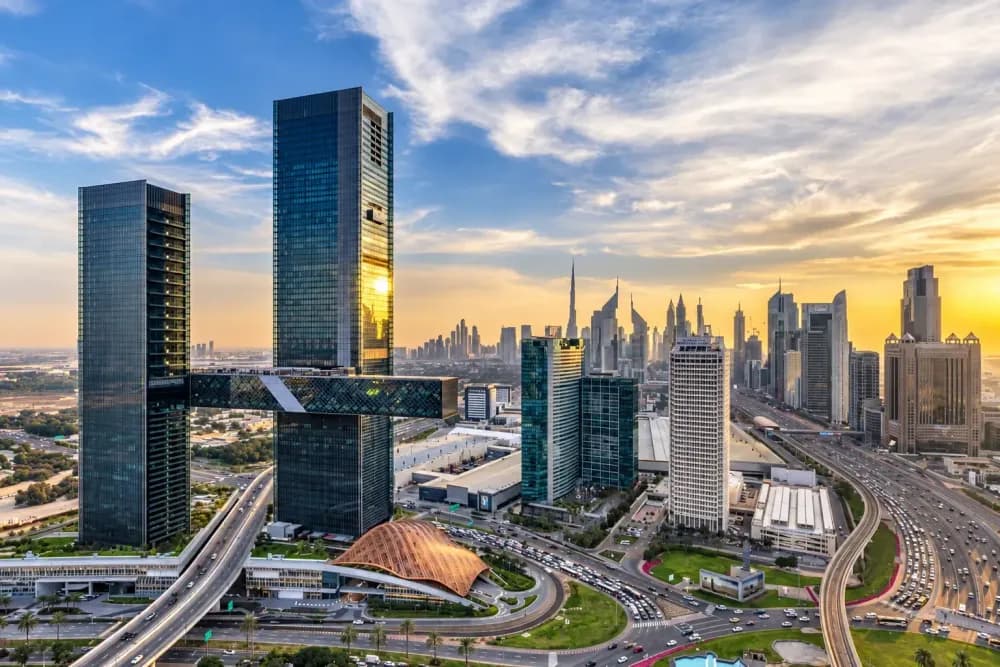
Table of Contents
Let's begin by stating a simple fact: With every market downturn in Dubai's property market, there is a prediction that it will never recover, and with every prediction, Indian investors prove it wrong. Firstly, at the start of 2026, buyers around the world were hesitant due to a regional conflict, yet Indian nationals made up approximately 20% of overseas buyers, the largest percentage of any nationality. Secondly, this is not the first time that Indians have bought property in Dubai; they have been purchasing property throughout the 2008 recession, COVID, and this year's turbulence. The factors which combine to encourage Indian property-buying are: history, finance, reliable government, and comfort.
A Trade Relationship That Goes Back Centuries
To put today's figures into perspective, one needs to go back in history. The relationship between India and the UAE did not start with skyscrapers and free zones but thousands of years ago, when Indian merchants traded spices, textiles, gold with the then coastal settlements that today constitute the UAE.
At the time of the UAE's foundation in 1971, Indians were not only investors; they were the driving force behind the country's development with thousands of skilled workers employed in the country's hospitals and schools, participating in its growth. Several of the UAE's most popular brands, including Lulu Hypermarket, Apparel Group, and Landmark Group, were established by Indians.
Today, the numbers continue to rise. Today, there are approximately 4 million Indians living in the UAE making them the largest expatriate community in the country. The UAE is India's third-largest trading partner and bilateral trade between the two countries is worth over 100 billion US dollars.
The Financial Case Is Difficult to Ignore
History explains the trust between the two countries, but not the money. To understand this, we must refer back to statistics and analyze the comparative data, and, at second glance, the appeal of the Dubai market is easily noticeable. In addition, for an investor, a choice is almost never made on the basis of one factor, and in Dubai, there are several key points that are attractive at the same time.
-
Tax efficiency: The UAE does not impose any form of personal income tax, capital gains tax, or inheritance tax. In India, the highest income tax bracket is 30%, and in the UK, the income tax can reach 45%, and the inheritance tax is up to 40%.
-
Currency stability: The dirham is pegged to the US dollar, making it one of the most stable currencies in the world. Thus, it provides a natural hedge against the gradual depreciation of the rupee over the last decade for Indian investors.
-
Lower entry costs: Buyers in Dubai pay a simple, one time transfer fee of 4%. In India, buyers often pay 8 to 13% in stamp duty, registration, and GST, and in Singapore, foreign buyers can be subject to additional stamp duties of up to 60%.
-
Faster transactions: Ready property purchase in Dubai is relatively quick, taking between 30 and 60 days. This compares to months of paperwork and approvals in Mumbai or London.
-
Better value per square foot: Dubai currently averages around 540 US dollars per square foot, significantly lower than prices in London and Singapore, according to Knight Frank's 2025 wealth report.
-
Higher rental yields: Dubai provides gross rental yields of 5 to 9%, which are approximately double that of London or Singapore and two to three times higher than in Mumbai or Delhi.
-
Strong capital growth: Dubai's residential prices rose 50 to 70% over the last five years, outpacing Mumbai, London, and Singapore over the same period.
-
Easy exit and liquidity: Sellers have no restrictions, no repatriation limits, and no need for government approval when they want to sell.
When you combine all eight of these factors, it becomes easier to understand why Dubai property is now viewed as a core part of the portfolio for so many Indian families and not just a side bet.
How the Market Behaved During the 2026 Conflict
Numbers on paper are useful, but the real test of any market is how it behaves during a crisis, and 2026 gave us exactly that test. When regional tensions intensified, transaction volumes did fall sharply. Volumes dropped 43% in March alone, and April and May stayed soft as well. Housing sales for the first half of the year fell 16.1% compared to the year before, and total transaction value dropped to 225.7 billion dirhams, down from 269.1 billion the previous year.
Here is the part that matters most, though. Even as fewer people were buying, prices barely moved. Resale prices per square foot held steady at around 1,500 dirhams, and primary market prices actually rose slightly to 1,800 dirhams per square foot. Rental yields stayed almost unchanged too, holding near 7.13%.
What this tells us is simple. Property owners chose to hold on to their assets, and many lowered rents slightly instead of dropping their sale prices. This is the behaviour of long term, financially secure investors, not speculators looking for a quick exit. By June and July, transaction volumes had already climbed back close to where they were before the conflict began.
A Government That Delivers on Its Promises
A resilient market rarely happens by accident, and Dubai's government plays a large part in this story. Even in the middle of the conflict, the government kept building instead of slowing down. In April 2026, it approved a 34 billion dirham metro Gold Line, the largest transport project since the original metro opened back in 2009.
This confidence is backed by two long term plans that are already funded and in motion:
-
D33 Economic Agenda: This plan aims to double Dubai's economy by 2033. It targets 32 trillion dirhams in total economic value, and it plans to raise foreign direct investment from 32 billion to 60 billion dirhams a year.
-
Dubai 2040 Urban Master Plan: This is a 20 year blueprint with one clear goal, to make Dubai the best city in the world to live in. It includes a 400% increase in public beaches and a doubling of green and recreational spaces.
On top of these plans, several major projects are already underway. These include a 35 billion dollar expansion of Al Maktoum International Airport, the Etihad Rail line connecting Dubai to Abu Dhabi, and new waterfront developments such as Palm Jebel Ali and Dubai Creek Harbour.
The Lifestyle Factors
Numbers and government plans explain a lot, but they do not explain everything. For many Indian buyers, the decision to invest in Dubai goes beyond returns alone. Dubai simply feels familiar. The food is familiar, the language is often understood, and the culture feels close, because Indians and Emiratis have lived, worked, and grown together as neighbours and colleagues for decades.
There are also practical reasons that make this comfort easier to act on. The Golden Visa program offers 5 to 10 year residency to anyone who owns property above 2 million dirhams. Separately, if you own any completed property outright, regardless of its value, you also qualify for a 2 year investor visa, so there is no fixed minimum investment needed for this shorter visa. With Dubai only a three hour flight away from India, the move rarely feels like leaving home behind. For most families, it feels like an upgrade instead.
Thinking about your next Dubai property?
Talk to an XRealty specialist — market guidance, shortlists, and honest advice, no obligation.
Frequently Asked Questions
Yes, because even during the regional conflict in 2026, the prices of resale properties remained stable and rental yields remained relatively consistent at around 7.13%, indicating a resilient market.
In the past five years, residential prices have gone up 50 to 70% in Dubai, compared to Mumbai, London and Singapore, during the same time frame.
Yes, they are. Despite the war, the government approved a 34-billion-dirham metro Gold Line, and it funds long-term projects such as the D33 Economic Agenda and the Dubai 2040 Urban Master Plan.
No, rental yields remained almost unchanged, hovering around 7.13%, which reflects a resilient demand despite the lower transaction volumes.
Related Articles
 Legal Process
Power of Attorney for Property in Dubai: A Simple Guide
 Market News
Dubai Rent Now, Pay Later Scheme: What Tenants and Landlords Should Know?
Understand how Dubai’s Rent Now, Pay Later option works, including monthly rent payments, tenant benefits, landlord considerations, eligibility and key costs.
 Market Pulse
What Makes Dubai So Resilient?
Discover why Dubai’s real estate market remains resilient, supported by population growth, investor demand, infrastructure, tourism and a strong economy.