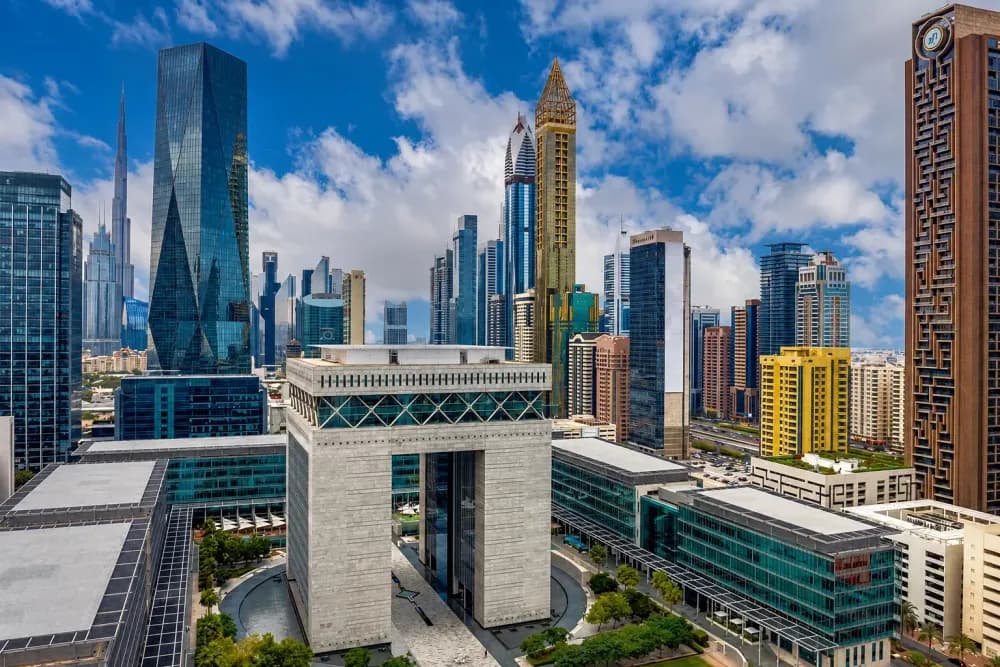
How the UAE Turns Global Talent into Long-Term Property Demand

Table of Contents
The UAE understands that capital follows opportunity and that opportunity follows talent. Its ability to attract ambitious people, execute plans quickly and invest beyond short political cycles is helping create sustained demand for businesses, communities and real estate.
The UAE has a relatively small citizen population but exceptionally large economic ambitions.
To bridge that gap, it has created an economy designed to attract entrepreneurs, executives, engineers, healthcare specialists, scientists, investors and creative professionals from around the world.
This is not simply an immigration strategy. It is a growth model.
Every new company requires employees, offices, professional services and technology. Those employees need homes, schools, healthcare, transport, retail and leisure facilities.
Talent attraction therefore becomes economic expansion, and economic expansion becomes property demand.
Ambition Is Treated as an Import
The UAE operates with what could be called a growing-pie mindset.
International businesses and successful professionals are generally viewed as potential sources of investment, expertise, employment and demand. Free zones and mainland structures provide different routes for companies serving local, regional and global markets.
When a business establishes itself in Dubai, its impact extends beyond the cost of a commercial licence.
It may:
- Rent or purchase office space.
- Recruit local and international employees.
- Buy legal, financial and marketing services.
- Create demand for residential property.
This produces a reinforcing cycle:
More companies attract more professionals. More professionals create demand for homes. More residents support additional businesses and services.
That connection helps explain why talent policy is relevant to property investors.
Government With a Startup Mentality
The UAE frequently approaches development in a manner resembling a well-funded startup:
Identify an economic problem or opportunity. Establish a measurable objective. Test a regulatory or commercial solution. Build the supporting infrastructure. Expand successful programmes.
Free zones were an early example. More recent initiatives include digital government services, regulatory sandboxes, long-term residency programmes and support for artificial intelligence, financial technology and property technology.
This approach does not guarantee perfect results. Rapid growth has created pressure involving traffic, housing costs and infrastructure demand.
The important feature is the willingness to respond through further investment and iteration.
Dubai’s approach to walkability is one example. Much of the city was designed around private vehicles, making some areas difficult to navigate without a car.
The Dubai 2040 Urban Master Plan addresses this through plans for pedestrian movement, cycling, mass transit and flexible mobility. It also targets green corridors connecting residential areas, workplaces and essential services.
Green and recreational spaces are expected to double, while land allocated to education and healthcare facilities is planned to increase by 25%.
The method is straightforward: build, observe, identify weaknesses and improve the next version.
The UAE Cannot Afford to Become Complacent
The UAE’s economic model depends heavily on remaining attractive to foreign businesses, tourists, investors and skilled residents.
International residents have choices. If the combination of opportunity, safety, taxation and lifestyle becomes uncompetitive, they can relocate to other markets.
This creates a powerful incentive for continuous improvement.
The UAE must keep investing in:
- Aviation and logistics.
- Digital connectivity.
- Liveable communities.
- Business-friendly regulation.
- Education and healthcare.
- Tourism and entertainment.
- Safety and public services.
- New employment-generating industries.
Reliance on a mobile international population can also be a vulnerability. Capital and skilled residents may respond quickly to geopolitical shocks, property cycles or regulatory changes.
However, this vulnerability creates discipline. Dubai cannot assume people will continue arriving simply because they have done so in the past.
It must continually earn their participation.
Planning Beyond the Next Political Cycle
The UAE’s governance model allows it to establish strategies extending across several decades.
The Dubai Economic Agenda D33, Dubai 2040 Urban Master Plan and UAE Centennial 2071 address economic expansion, international trade, sustainability, education, technology and quality of life.
The UAE Centennial 2071 programme creates a national planning horizon spanning five decades.
Democratic systems provide important benefits, including electoral accountability and established mechanisms for changing political leadership. However, frequent elections can make it more difficult to maintain continuity on infrastructure whose benefits may take decades to appear.
Dubai’s model can move major projects from strategy to implementation without the same electoral timetable.
Jebel Ali Port, Emirates Airline, Dubai Metro and the planned expansion of Al Maktoum International Airport demonstrate how infrastructure is used to shape future economic demand.
For property investors, this matters because transport networks, economic districts and public infrastructure influence where people choose to live and where businesses concentrate.
A property may be privately owned, but much of its long-term value is determined by the public investment surrounding it.
Residency as an Economic Partnership
The UAE’s residency system differs from conventional Western immigration models.
For most expatriates, residence is connected to employment, business ownership, family sponsorship, professional achievement or investment. Long-term visas have increased stability, but they generally remain renewable permissions rather than permanent residence or an automatic route to citizenship.
The Golden Visa is available to qualifying investors, entrepreneurs, specialised professionals, exceptional talents and high-achieving students.
Current federal guidance provides:
-
Five-year renewable residency for qualifying property investors.
-
Five- or ten-year residency for other eligible categories.
-
The ability to sponsor eligible family members.
-
No requirement for a traditional local sponsor.
-
Greater flexibility to remain outside the UAE.
For property investors, the general qualifying threshold is ownership of real estate valued at a minimum of AED2 million, subject to applicable conditions and documentation.
The structure creates an economic partnership. The UAE provides residence, infrastructure, commercial access and a low-personal-tax environment. Residents contribute through employment, entrepreneurship, expertise, consumption or investment.
This model can appeal to internationally mobile people who value flexibility and economic opportunity.
It also has limitations. Eligibility must be maintained, regulations can change and long-term residence does not automatically lead to citizenship. Prospective residents should assess these trade-offs rather than focusing exclusively on tax benefits.
How Talent Becomes Property Demand
The UAE’s talent and residency policies help create several sources of real estate demand:
- Professionals relocating for employment.
- Entrepreneurs establishing companies.
- Families purchasing homes for long-term use.
- Businesses requiring offices and warehouses.
- Investors seeking rental income.
- Residents moving from renting to ownership.
The absence of personal income tax may improve disposable income for certain residents, although the benefit depends on their nationality, tax residence and obligations in other jurisdictions.
Long-term visas can also encourage people to make more permanent financial decisions. Someone expecting to remain in Dubai for five or ten years may be more willing to purchase a home, establish a business or acquire an investment property.
However, strong national fundamentals do not make every property a strong investment.
Buyers must still assess:
- Developer quality and delivery history.
- Existing and future supply.
- Genuine rental demand.
- Service and maintenance charges.
- Building management.
- Transport connections.
- Payment-plan obligations.
- Resale demand and liquidity.
Dubai is a highly segmented market. A well-connected property serving genuine residents can perform very differently from an oversupplied unit sold mainly through promotional promises.
Dubai’s Competitive Advantage Is Continuous Improvement
The UAE’s strength is not simply that it attracts global talent. It has built an economic system that depends on continuing to attract that talent.
Rapid execution turns plans into infrastructure. Long-term strategies provide continuity. Residency programmes encourage qualified people to make deeper commitments. Expanding businesses and populations create demand for new communities and property.
The UAE is not successful because it has eliminated every weakness. It remains competitive because its development model requires it to keep identifying weaknesses—and to keep improving.
For long-term investors, that commitment may matter as much as any individual project.
Thinking about your next Dubai property?
Talk to an XRealty specialist — market guidance, shortlists, and honest advice, no obligation.
Frequently Asked Questions
The UAE combines moderate government debt, strong public assets, modern infrastructure, low personal taxation and policies designed to attract global businesses and investors.
No. The UAE does not impose federal income tax on individuals, but it collects VAT, government fees, excise duties and corporate tax. Tax obligations depend on the individual, company and type of income.
According to the IMF, the UAE recorded a fiscal surplus equal to 6.4% of GDP in 2024, while general government debt remained moderate at approximately 35% of GDP. The country also holds substantial public and sovereign assets.
No market is completely protected. Dubai remains exposed to tensions involving Iran, Gulf shipping routes and regional airspace. Its advantage is its ability to respond quickly, maintain essential operations and support affected businesses.
Dubai introduced AED 1.5 billion in economic support, opened alternative trade routes and maintained airport and supply-chain operations. Dubai Customs reported that its measures helped preserve AED33.9 billion in trade flows between March and June.
Dubai may be considered a comparatively resilient international investment centre, but it is not risk-free. Investors should assess geopolitical exposure, market cycles, liquidity and the quality of each individual asset.
Resilient economies generally have strong financial buffers, reliable infrastructure, stable institutions, diversified industries and the ability to introduce targeted support quickly when disruption occurs.

Related Articles
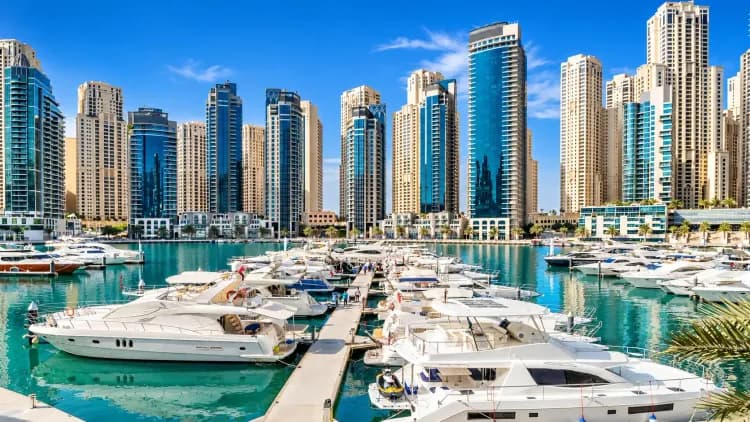 Invest In Dubai
Why the World's Richest Are Choosing Dubai Over Every Other City
Discover why the world’s wealthiest investors and entrepreneurs are choosing Dubai for luxury real estate, tax advantages, global connectivity, safety and long term growth.
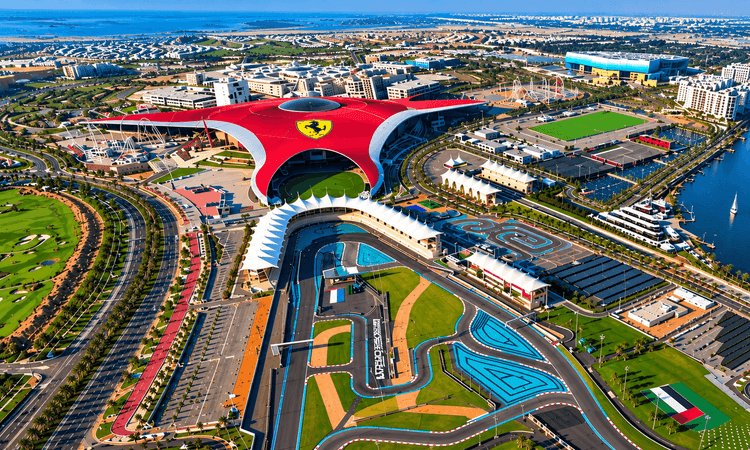 Lifestyle and Community
Yas Island Abu Dhabi: The Complete Guide to Lifestyle, Property and Investment (2026)
Explore Yas Island, Abu Dhabi: top communities like Water's Edge, Mayan, Noya and Yas Acres, plus rents, schools, attractions and Golden Visa tips.
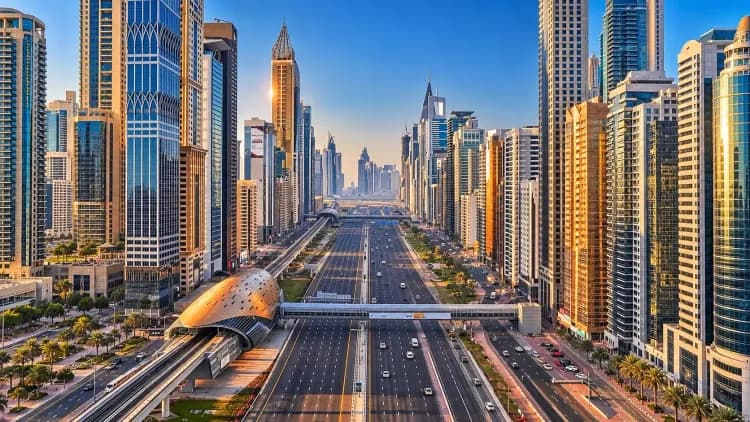 Invest In Dubai
Where to Buy in Dubai in 2026: Five Areas for Different Buyer Priorities
A practical guide to five Dubai locations for end users, long term growth buyers and income focused investors.