Table of Contents
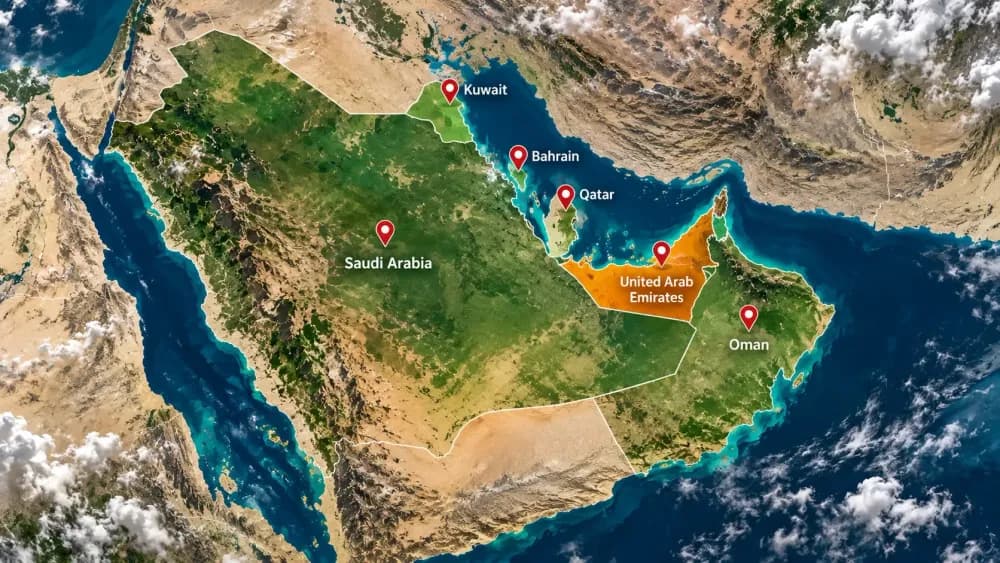
A Gulf holiday could soon become much easier. Instead of managing separate entry requirements for several destinations, eligible tourists may be able to visit the United Arab Emirates, Saudi Arabia, Qatar, Bahrain, Kuwait and Oman using one visa.
The planned GCC Grand Tours Visa is often compared with Europe’s Schengen visa, although the Gulf states will establish their own rules.
For Dubai, the potential benefit goes beyond easier border crossings. Visitors may use the city as the first stop on a wider Gulf itinerary, stay longer or return more often. That could support hospitality, holiday homes, serviced apartments and selected residential properties.
The initiative has received regional approval, but it is not yet publicly available. Final fees, eligibility rules, operating dates and an official application portal remain unconfirmed.
What Has Been Confirmed
The unified tourist visa was approved at the 44th GCC Summit in December 2023. The UAE Ministry of Economy and Tourism said the initiative was designed to make travel between member states easier, encourage longer visits and increase tourism spending across the region.
Implementation has taken longer than some early announcements suggested. In July 2025, the GCC Secretariat confirmed that passport departments from the six interior ministries were continuing technical meetings in preparation for the launch.
Official UAE entry guidance updated in September 2026 still directs travellers to the existing national visa channels. The official sources reviewed for this article do not provide a final launch date, a public application process, a fee schedule, or a complete list of eligible nationalities.
Travellers should avoid submitting passport information or payments to commercial websites claiming to offer the visa. Applications should begin only after GCC or national authorities announce an authorised process.
The UAE-Bahrain Pilot Is a Separate Project
The UAE and Bahrain launched the first phase of a “single entry point for air travel” project in February 2026. It simplifies certain airport procedures for participating travellers, but it is not the unified tourist visa.
The pilot covers processing on a specific route. The Grand Tours Visa is intended to provide eligible international visitors with entry across all six member states.
Why Dubai Could Become a Starting Point
Dubai already has the aviation network and accommodation capacity to serve as a regional gateway. Dubai International Airport handled a record 95.2 million passengers in 2025, connecting the city to 291 destinations through 108 international airlines. Dubai Airports expects traffic to approach 99.5 million passengers in 2026.
Dubai also welcomed 19.59 million international overnight visitors in 2025, an increase of 5% from 2024. Average hotel occupancy reached 80.7%, while visitors stayed for an average of 3.7 nights.
A unified visa would not guarantee that every Gulf traveller chooses Dubai. Other regional cities will compete for the same itineraries. Dubai’s flight connections, hotel capacity and tourism services nevertheless give it an advantage as an arrival or departure point.
The most important change could be the shape of the trip. A visitor might begin with several nights in Dubai, travel onwards to Oman or Saudi Arabia and return through the UAE without applying separately for each destination.
If that convenience encourages longer stays or repeat visits, more tourism spending could remain in the city.
How Tourism Could Translate into Property Demand
A simpler visa may attract more multi-country trips and produce longer or repeat stays in Dubai. That gives more visitors first-hand experience of the city, and some may later consider a holiday home, investment property or relocation.
This progression is possible, not automatic. The Grand Tours Visa would be a travel permit rather than a residence visa, and most tourists will never become property buyers. Its earliest and most measurable property effect would probably appear in visitor accommodation.
Holiday homes, serviced apartments and branded residences could benefit if travellers spend additional nights in Dubai. Areas such as Downtown Dubai, Business Bay, Dubai Marina and Jumeirah Beach Residence may be relevant because they combine visitor attractions, transport links and established short-stay markets.
Properties near airports or cruise terminals may also appeal to travellers using Dubai as a regional base.
Potential buyers could also explore neighbourhoods, compare completed homes and understand travel times, services and daily costs instead of relying entirely on overseas marketing.
Regional Access Will Also Increase Competition
The same visa may make it easier to compare Gulf property markets. Travellers could examine each city’s homes, lifestyle and infrastructure during one journey.
Dubai’s case rests on international connectivity, freehold communities, functioning resale and rental markets, and a regulated registration system.
Any claim that the city can serve as a Gulf home base must still be supported by the individual property’s price, quality and intended use.
What Investors Should Examine
The visa should not be used as a stand-alone reason to purchase property. Anyone considering a tourism-oriented asset should test its performance against factors that already influence demand:
- Access to attractions, airports, public transport and business districts
- Holiday-home licensing and individual building rules
- Service charges, management fees and maintenance costs
- Seasonal occupancy and realistic nightly rates
- Existing and planned competing supply
- Net income after operating costs rather than the advertised gross yield
Higher visitor numbers do not benefit every building equally. A well-managed apartment in a convenient location may capture short-stay demand, while an overpriced or poorly operated unit can still underperform.
Investors should also avoid assuming that the visa will automatically raise property prices, create residency rights or make every holiday home profitable.
After launch, its actual impact should be measured through average visitor stays, repeat travel, multi-country itineraries, accommodation occupancy and property enquiries connected with the scheme.
The XRealty View
The GCC Grand Tours Visa could make the Gulf easier to experience as one connected tourism region. Dubai would enter that change with strong airline links, established attractions and a mature hospitality market.
For property investors, it is best treated as a supporting demand factor. A purchase must still make sense at today’s price, with realistic income, manageable costs and enough appeal to perform without relying on a future policy.
If the final visa increases regional trips, repeat visits and time spent in Dubai, well-located visitor-oriented properties may gain an additional source of demand.
The visa may bring more people through Dubai’s doors, but location, pricing and genuine rental demand will determine which properties benefit.
Thinking about your next Dubai property?
Talk to an XRealty specialist — market guidance, shortlists, and honest advice, no obligation.
Frequently Asked Questions
No official public application portal or final operating rules were identified as of 9 September 2026. Travellers should continue following the visa requirements of each destination until GCC or national authorities confirm the unified process.
The planned scheme covers all six GCC members: the UAE, Saudi Arabia, Qatar, Bahrain, Kuwait and Oman.
It follows the broad idea of one permit for several countries, but GCC authorities will determine its eligibility, duration, movement rules and security procedures. Travellers should not assume that every Schengen rule will apply.
It may support tourism-related demand, but it cannot guarantee price growth. Performance will continue to depend on location, supply, purchase price, rental income, operating costs and the wider economy
No. Tourist and residence visas serve different purposes. Any residency application will remain subject to the UAE’s separate eligibility rules.
Related Articles
 Invest In Dubai
Where to Buy in Dubai in 2026: Five Areas for Different Buyer Priorities
A practical guide to five Dubai locations for end users, long term growth buyers and income focused investors.
 Off Plan
Dubai Islands Explained: Five Islands, Five Different Property Decisions
Understand Dubai Islands through its five planned districts, from Central and Shore Island to Golf, Marina and Elite Island, before choosing a property.
 NRI Investment
The Real Reason Indian Investors Never Stopped Buying Dubai Real Estate
Discover why Indian investors continue to choose Dubai real estate, from tax efficiency and rental yields to currency stability, residency benefits and long term growth.