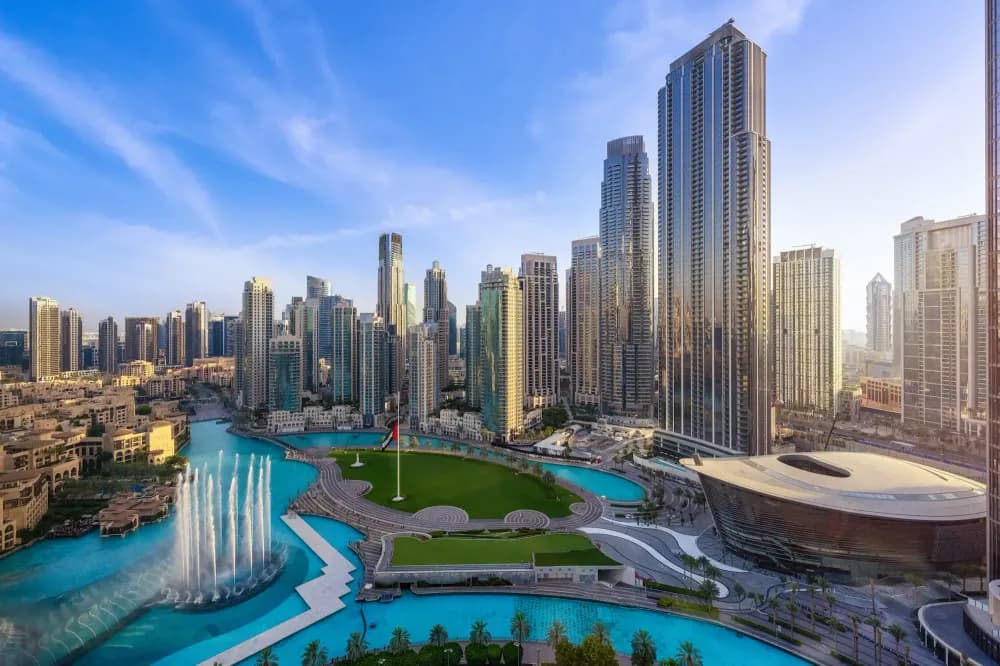
Dubai Property Prices 2026: Down 10%, Not 30%

Table of Contents
Every number below comes from Bloomberg, a ratings agency, the IMF or a global property firm. You should not have to take a broker’s word about a broker’s market. Someone sent me a message last week. It said Dubai property is down 30 per cent. It is not. And you should not just believe me. I sell property. I have a reason to tell you the market is fine. So let me show you who is actually saying what.
What Bloomberg said
On 23 April this year, Bloomberg wrote that Dubai home prices had fallen for the first time since the boom that started after Covid. The fall was 5.9 per cent in March.
In plain terms: In one month, prices went back to where they were six months earlier. Bloomberg gets its Dubai price numbers from something called the ValuStrat index. An index is just a number that tracks how prices move over time. Same idea as a temperature reading. That index says prices fell 10 per cent in total, from the peak in late February to June.
Ten. Not thirty. And here is the part people forget. Bloomberg also wrote that Dubai prices have gone up more than 70 per cent since 2020. So if you bought five years ago, you are still far ahead.
The number that fools people
Now the other side. There is a number going around that says the market is completely fine. It is also being read wrong.
Knight Frank is a big global property firm. On 6 July they said something impressive. In the first six months of this year, 296 homes in Dubai sold for more than $10 million each. That is a record. It adds up to $5.1 billion, and it is 14 per cent more than last year.
People send me this and say, look, nothing happened. But read what Knight Frank said in the same report. This is Nicholas Spencer, who runs their homes business for the Middle East:
"Noting the ongoing Middle East regional conflict, the quarterly performance of Dubai’s prime market during H1 is reflective of deals that were mostly closed pre-conflict."
In simple words: most of those deals were agreed before the war started. Here is why that matters. When someone buys an expensive home, the deal takes months to finish and get registered. So the number you see today is telling you about the past. Split those six months in half and you can see it.
- January to March: 165 big sales.
- April to June: 131 big sales.
That is a drop of 21 per cent. So it was a record six months, with a bad three months hiding inside it. That record is a photo of February. It is not a photo of today.
Prices did not crash. Sales did.
This is the bit most people miss. The price of a home did not fall much. But the number of homes being sold fell a lot.
- Bloomberg, March: About 16,000 sales dropped to about 13,000. The money spent fell about 20 per cent in one month.
- Goldman Sachs, in Fortune on 1 June: in the first 12 days of March, UAE deals were down 37 per cent on the year before.
- JLL, another global property firm: from April to June, Dubai sales were down 28.6 per cent on last year. Resale homes were down 41.8 per cent.
- Semafor, 10 August: Emaar earned 21 per cent more in the first half of the year. But its new sales fell 42 per cent.
- Savills: developers launched 5,335 new homes between April and June. In the three months before that, they launched more than 45,000.
Think about what that really means. Buyers stopped buying. Developers stopped launching. But owners did not rush to sell. And when nobody is forced to sell, the price does not crash. It just sits still. S&P, the ratings company, explained why nobody was forced. In Dubai, if you buy a home before it is built, you have to pay 30 to 40 per cent of the price before you are allowed to sell it on. So people cannot simply panic and dump.
There is no single "Dubai"
Stop asking me how Dubai is doing. There is no one answer. It depends on what you own. Moody’s, the ratings company, said this back in February. That was before the war. Lisa Jaeger, a senior analyst there, wrote:
"Modest outright price declines are probable in the apartment segment."
She was right. Look at April to June.
- Savills: villas fell 0.8 per cent. Apartments fell 4 per cent.
- Cushman and Wakefield: Palm Jumeirah fell 9 %. Downtown fell 7%. Business Bay fell 7%. Springs and Meadows fell 9%. Dubai Hills fell 5%. And JVC apartments, the ones everyone warns you about, held up best at 3 %.
- Read that list again. The famous, expensive places fell the most. The place people call risky held up best. If someone told you a fancy address is always the safe one, the last three months said the opposite.
The part my own industry will not tell you
This drop was predicted before the war. By the people who get paid to be right.
-
Fitch is a ratings agency. On 29 May 2025, nine months before the first missile, they said Dubai prices would fall by up to 15 per cent. Their reason had nothing to do with war. It was simple. Too many new homes were coming.
-
Their words: "This rate of project delivery roll-out will test the absorption rate of the Dubai residential market in 2026-2027." In plain English: too many homes are being finished, and there may not be enough buyers for them.
-
Knight Frank thought the same. On 2 February this year, still before the war, they expected Dubai prices to rise only about 1 per cent in 2026. So even the optimists had already called the boom over.
Since the war, Fitch has gone further. Fortune reported on 1 June that Fitch now expects a bigger fall than the 15 per cent they first said. I am a broker. None of this helps me sell anything. It is just true.
The real risk is not the war
Everybody is calling me about Iran. That is the wrong worry. Here is the right one.
-
Moody’s counts about 180,000 new homes being finished in Dubai between 2026 and 2028. That is around 60,000 a year. Normally Dubai finishes 30,000 to 40,000 a year. So roughly double the usual number of homes is arriving. And Knight Frank says 85 per cent of what is coming in 2026 is apartments.
-
That is why apartments are falling and villas are not. It is not complicated. It is just supply. On the banks, three people worth listening to. Said Bakhache runs the IMF team for the UAE. On 17 July he said the banks’ exposure to property is "contained", but that "evolving market conditions warrant continued monitoring". In plain words: the banks are fine, but keep watching.
-
Anton Lopatin is a senior director at Fitch. In Fortune on 1 June he said: "We have analyzed the loan books of all rated UAE banks, and corporate real estate in particular poses the biggest risk among the areas of the economy most sensitive to conflict-related spillovers."
-
And S&P, on 30 March: "Real estate accounts for more than a quarter of some United Arab Emirates banks’ loan books." None of that is about missiles.
What is holding the market up
Three things. And none of them are my opinion.
-
One, the economy. The IMF said on 17 July that the UAE "has shown remarkable resilience to the conflict in the Middle East".
-
Two, the people. Semafor reported on 5 August that 61,000 people left Dubai during the worst of the war. Then by July the population hit 4.73 million. That is higher than before the war started. More people came back than left.
-
Dominic Volek at Henley and Partners tracks where wealthy people move. He put it simply: "The UAE story in 2026 is one of diversification and optionality, not an exodus."
-
Three, this market is built differently now. Anton Lopatin at Fitch again: "Dubai’s property market has become much more developed since the crash 15 years ago when prices dropped by up to 40-50%."
That is a ratings agency saying 2026 is not 2008. It is worth more than anything I could tell you.
One thing is genuinely bad, and I will not skip it. Tourism. Semafor recorded Dubai hotels only 16 per cent full in the week ending 14 March. Normally it is around 90 per cent. If your income comes from short stays, do not expect a fast recovery.
My view
Two things have changed in how I write about this market.
- First, I stopped using any number I cannot trace back to a name you would trust. Not because Dubai data is wrong. The Land Department is the official record, and ValuStrat is the index Bloomberg itself uses. It is because you should not have to take a broker’s word about a broker’s market.
- Second, someone told me my writing was hard to follow. That was my fault, not theirs. If you need a finance degree to read my post, I have failed at my job. So I have stopped trying to sound clever and started trying to be understood. This is that version.
Now, the market.
I am not telling you this is the bottom. I do not know. Nobody does. There is still no proper ceasefire. Fitch has moved its forecast the wrong way. Fortune counted 3,292 homes where the asking price was cut, worth AED 2.36 billion in total. One home in Damac Lagoons was cut by 61 per cent. That is real pain and I am not going to pretend it is not there.
-
Here is what I will say with a number attached. When I look at a new purchase now, I plan for prices to grow 8 to 12 per cent a year. Not the 70 per cent over five years that Dubai just did. If the maths does not work at 8 per cent, I do not like the deal.
-
And I would rather own a good ready villa than an apartment that gets handed over in 2027. Not because I have a feeling. Because Moody’s has written down which type takes the hit, and Knight Frank has written down that 85 per cent of what is coming is apartments. Last thing, and it is the one that actually matters to you.
-
If your tenant renewed this year, your rent did not change. Your home is worth a little less on paper, but you are earning the same. That is not a crisis. Do nothing.
-
If your home is empty, or it is still being built and finishes in 2027, and you need the money, that is a different conversation. Come and have it with me. I will tell you the truth even if the truth is sell. I would rather say that than talk you into holding something you cannot afford to hold.
Thinking about your next Dubai property?
Talk to an XRealty specialist — market guidance, shortlists, and honest advice, no obligation.

Related Articles
 Invest In Dubai
Where to Buy in Dubai in 2026: Five Areas for Different Buyer Priorities
A practical guide to five Dubai locations for end users, long term growth buyers and income focused investors.
 Market News
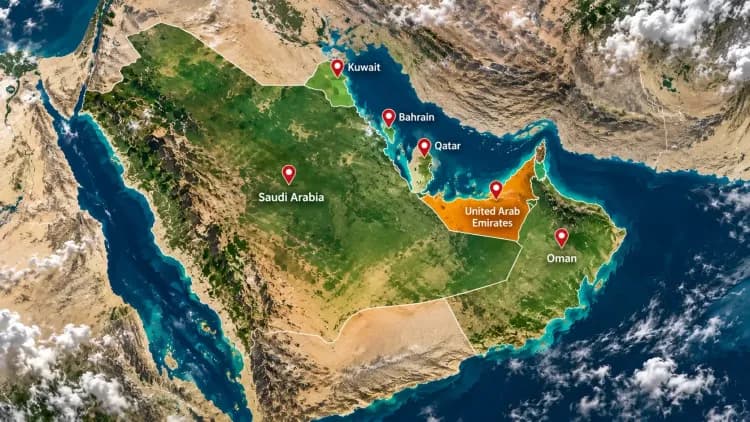
One Visa, Six Gulf Countries: What the GCC Grand Tours Visa Could Mean for Dubai Property
Explore how the planned GCC Grand Tours Visa could influence Dubai tourism, holiday homes and property demand—and what remains unconfirmed.
 Off Plan
Dubai Islands Explained: Five Islands, Five Different Property Decisions
Understand Dubai Islands through its five planned districts, from Central and Shore Island to Golf, Marina and Elite Island, before choosing a property.