
What Prime Minister Modi's "Second Home" Remark Really Says to Indians Eyeing Dubai

Table of Contents
On May 15, 2026, the Indian Prime Minister came to Abu Dhabi, and Sheikh Mohamed bin Zayed Al Nahyan came to the airport himself to receive him. As the plane entered UAE airspace, UAE fighter jets escorted it in. Then at the reception, standing next to the UAE President, Prime Minister Modi said the line that was on front pages in both countries the next morning. "I have come to my second home."
Plenty of people read it as warm diplomatic language, and it was. But this was his eighth UAE visit since 2015, and when the leader of the world's most populous country calls your country his second home, in front of cameras, it's not really an offhand remark. It says something about where the relationship sits right now, and it matters for the roughly 4.5 million Indians living here and the money they're steadily moving into Dubai property.
India-UAE Trade and Investment: The Numbers Behind the Visit
A phrase like that carries more when there's weight behind it, and over the last few years the India-UAE numbers have gotten heavy enough to back it up.
Bilateral trade hit $101.25 billion in FY 2025-26, crossing $100 billion for the second year running, up 37% since the CEPA trade agreement came into force in 2022. Both governments have now put a $200 billion target on the table for 2032. On investment, India was the single largest source of foreign direct investment into the UAE in 2025, at $12.58 billion across 275 projects, and more than 16,600 new Indian companies registered in the UAE that year.
The visit covered defence, energy, and regional security. Energy was the one that mattered most given the timing. With the Iran war disrupting Gulf shipping routes like the Strait of Hormuz, the UAE became a more important energy partner for India, not less. And when Prime Minister Modi said India stands "shoulder-to-shoulder" with the UAE on security, he meant it. This is a relationship that has gone well beyond just trade now.
Why Modi Called the UAE India's "Second Home"
Leaders pick their words carefully when they're standing next to another head of state. There was a message in that phrase for more than one group of people listening.
For the UAE leadership, it framed India's commitment as structural rather than a run of one-off deals. The 4.5 million Indians living here, the largest expatriate community in the country, took it as recognition that they're part of a partner economy now, not a temporary workforce passing through. And for anyone moving serious money, it quietly closed off a question that used to sit in the background, whether Indian capital in the UAE was exposed to any political risk. India was the UAE's top source of foreign investment in 2025. The answer, said on camera, was no.
Why Indians are the largest foreign buyer group in Dubai property
-
Indians have been the biggest foreign buyer group in Dubai's residential market for four years straight, making up somewhere around 20 to 22% of all foreign purchases according to Anarock research cited by Khaleej Times. Indian money going into Dubai real estate in 2025 alone is estimated at around INR 95,000 crore.
-
The reasons behind it look nothing like they did five years ago. A lot of it comes down to tax. India's regime for resident HNIs has tightened over the past few years, while the UAE stays tax-free on personal income, on rental income, and on capital gains. For a family thinking in decades rather than years, that gap is hard to look past.
-
Then the Golden Visa changed the maths again. After the February 2026 reform removed the upfront payment rule, buying a property worth AED 2 million now gets you a 10-year UAE residency. It doesn't matter if the property is ready, off-plan property, or on a mortgage. So a Dubai property is no longer just an investment. It also gives you residency, and that changes how a family thinks about the whole decision.
-
And underneath all of it is the residency tipping point. Henley & Partners has the UAE as the world's number one destination for relocating millionaires, four years running, with roughly 9,800 expected to settle here in 2025, up from 6,700 the year before. A big chunk of that is Indian. Once the question turns from "should we own something in Dubai?" into "should part of the family actually move here?", the property call becomes a residency call, and the whole thing gets weighed differently.
What the Visit Means for Indian Property Investors in 2026
For an Indian investor, the real takeaway is that Dubai has shifted from a tactical position into a long-term allocation. Between the bilateral investment treaty, CEPA, the defence cooperation, and now the public "second home" framing, the political risk on the relationship has effectively gone to near-zero. The regulatory direction keeps getting friendlier, and after the Iran war, the UAE's standing as a stable, well-defended place to hold assets is a genuine advantage rather than something you just assume.
It still won't tell you what to buy, though. Segment matters more than the headline ever will. Prime supply-constrained villas and branded residences have held their value through every previous Dubai cycle, while mid-tier apartments in the heavy-supply corridors carry more correction risk over 2026 and 2027. A good backdrop still doesn't tell you what to actually buy.
If you're an Indian family office, an NRI investor, or a UHNI weighing Dubai property against this backdrop, reach out for a private conversation. The diplomatic and economic picture is favourable, but the right specific call depends on your portfolio, your tax position, your residency goals, and your timeline. My practice handles Indian family office portfolios, NRI investors, and international UHNI clients. All conversations are confidential.
— Ranjit Nair, Investment Advisor & Real Estate Market Analyst, Xperience Realty
Thinking about your next Dubai property?
Talk to an XRealty specialist — market guidance, shortlists, and honest advice, no obligation.
Frequently Asked Questions
He said it during his May 15, 2026 visit, with the UAE President beside him. It reflects how big the relationship has become: around 4.5 million Indians live in the UAE, India was the UAE's largest FDI source in 2025 at $12.58 billion, and this was his eighth UAE visit since 2015. Warm words, but there's real weight behind them.
Indians put in around INR 95,000 crore into Dubai property in 2025. They make up roughly 20 to 22% of all foreign buyers in Dubai, and have been the biggest foreign group for four years running, going by Anarock research cited by Khaleej Times.
Yes. The Golden Visa gives 10-year residency, and the February 2026 reform scrapped the old upfront payment rule. Now the only requirement is property worth AED 2 million or more, whether it's ready, off-plan, or mortgaged. That's made Dubai property a direct residency route, especially in the AED 2 to 3 million range.

Related Articles
 Lifestyle and Community
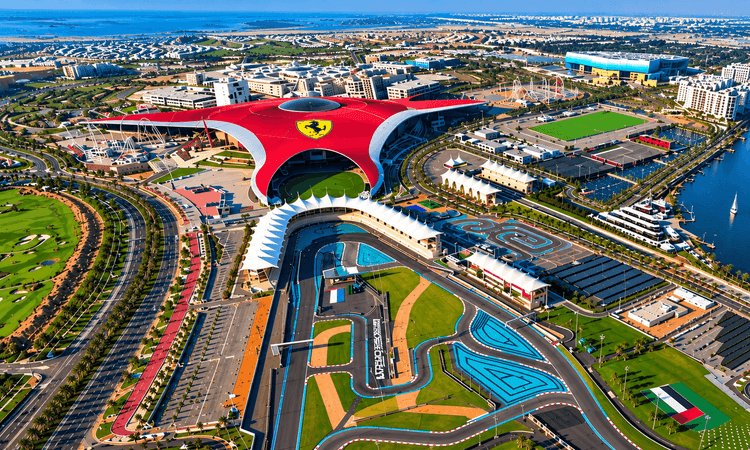
Yas Island Abu Dhabi: The Complete Guide to Living, Property and Investment (2026)
Explore Yas Island, Abu Dhabi: top communities like Water's Edge, Mayan, Noya and Yas Acres, plus rents, schools, attractions and Golden Visa tips.
 Invest In Dubai
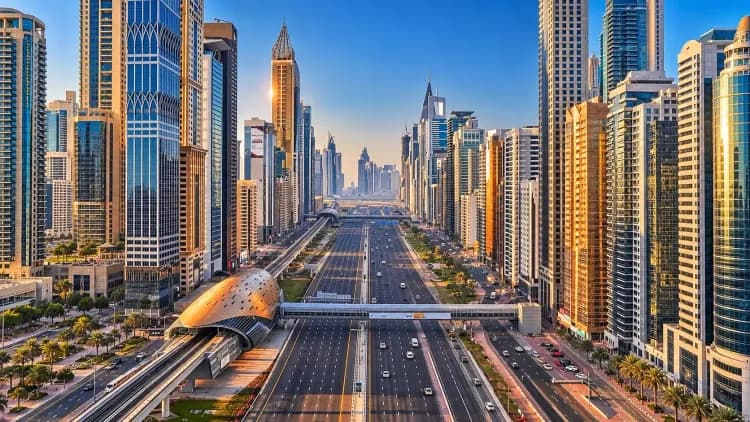
Where to Buy in Dubai in 2026: Five Areas for Different Buyer Priorities
A practical guide to five Dubai locations for end users, long term growth buyers and income focused investors.
 Market News
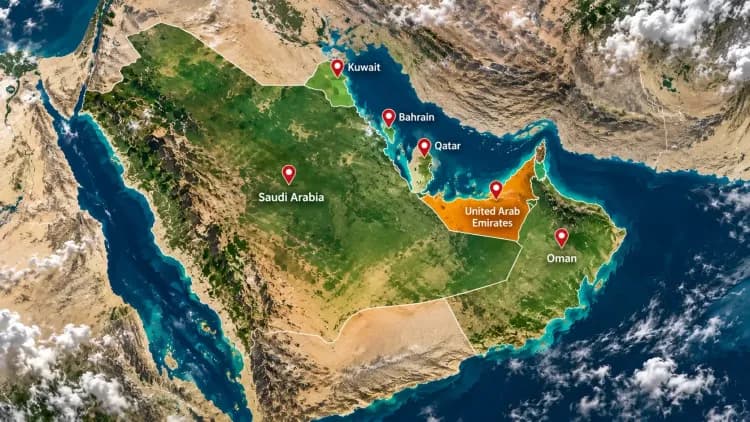
One Visa, Six Gulf Countries: What the GCC Grand Tours Visa Could Mean for Dubai Property
Explore how the planned GCC Grand Tours Visa could influence Dubai tourism, holiday homes and property demand—and what remains unconfirmed.