
How Indian Developers and Institutional Investors Can Enter Dubai's Land Market in 2026
Indian developers and institutional investors ready to enter Dubai's land market in 2026, Explore freehold plot zones, entry structures and legal frameworks.
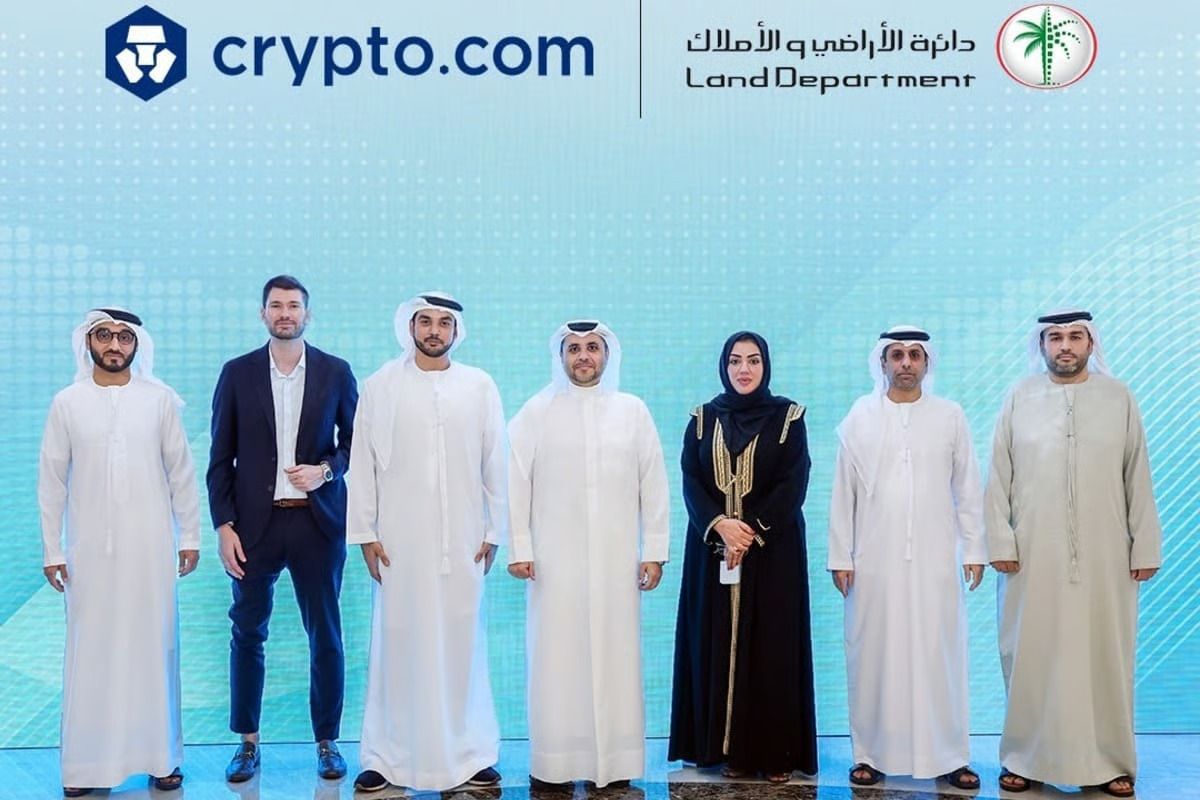
The Dubai Land Department (DLD) has entered a memorandum of cooperation (MoC) with Crypto.com, a leading global cryptocurrency platform, to foster a digital investment ecosystem for virtual real estate assets. Signed on July 6, 2025, by DLD Director General Omar BuShahab and Crypto.com's Mohamed Abdul Latif Al Hakim, this partnership leverages blockchain technologies and digital currencies to streamline property transactions. It aligns with Dubai's ambitious Real Estate Strategy 2033, which aims for Dh1 trillion ($272 billion) in transactions, and the emirate's push toward 90% cashless operations by 2026. This move underscores Dubai's commitment to positioning itself as a global hub for technological innovation in real estate, building on prior initiatives like the March 2025 pilot for real estate tokenization and the May 2025 launch of the MENA region's first tokenized property project via the Prypco Mint platform.
Crypto.com will supply essential technological infrastructure, including solutions for investor verification, secure custody, transaction settlements, and real estate tokenization. This encompasses technical support, advisory services, analytical tools and assistance in securing regulatory approvals for digital currency integrations. In turn, DLD will extend administrative and logistical support to facilitate joint projects, ensuring seamless implementation within Dubai's regulatory framework.
This collaboration enhances Crypto.com's expanding footprint in the UAE, where it has already partnered with entities like the Dubai Department of Finance for crypto-enabled government payments and major developers such as DAMAC and Emaar, who accept digital assets for property purchases.

The DLD-Crypto.com partnership is part of a larger wave of crypto integrations across UAE sectors. On July 8, 2025, Emirates Airlines signed an MoU with Crypto.com to enable cryptocurrency payments for flight bookings starting in 2026, potentially including BTC, ETH, and other assets. Similarly, Dubai Duty Free is exploring crypto payments for retail by 2025, further solidifying the emirate's crypto-ready infrastructure. These moves follow Dubai's earlier adoption of blockchain in real estate, such as the 2017 launch of a blockchain-based land registry in collaboration with Smart Dubai, and recent policies allowing crypto staking for residency visas. Experts note that such initiatives could attract more foreign investment, with real estate sales already hitting new highs of 98,603 transactions worth AED 326.7 billion in the first half of 2025.
The announcement has elicited enthusiastic responses from industry players and online communities. On X (formerly Twitter), VESTN described it as a "defining moment for real estate tokenization," emphasizing its validation of institutional-scale on-chain investments and alignment with Dubai's AED 1 trillion 2033 vision. Crypto enthusiasts highlighted the potential for revolutionizing the sector, with one post stating, "Blockchain integration revolutionizes how we buy, sell, and invest in property. This could define the next era of real estate." Other reactions tied it to broader UAE trends, such as Emirates' crypto flight payments and staking for visas, underscoring crypto's growing real-world utility.
Arabic-language feeds echoed the excitement, with translations noting the enablement of crypto payments and tokenization. Projects like Mavryk Network and Tokenized Toast Club praised the deal for advancing tokenized RWAs (real-world assets), while Coin Bureau reported it as a key step in UAE's crypto payments push. Some users speculated on integrations with assets like XRP, though no official confirmation exists. Overall, the sentiment is bullish, with discussions focusing on enhanced liquidity, global accessibility, and Dubai's leadership in digital finance.
This collaboration marks a Revolutionary blend of blockchain and real estate, offering enhanced efficiency, transparency, and inclusivity for investors worldwide. Dubai's forward-looking approach could establish a benchmark for other jurisdictions, perhaps even incorporating AI-driven tools for market predictions and valuation in tokenized ecosystems. Nevertheless, amid crypto's inherent volatility and the need for robust regulatory frameworks, participants should exercise caution and conduct thorough due diligence in this rapidly evolving arena.
It's the process of converting property into blockchain-based digital tokens, allowing fractional ownership and easier global investment.
Yes, through the DLD–Crypto.com partnership, you can use BTC, ETH, and CRO to purchase property and pay related fees.
Yes, it's regulated by the Dubai Land Department (DLD) and overseen by the Virtual Assets Regulatory Authority (VARA).
Benefits include fractional ownership, faster transactions, global access, and greater transparency via blockchain.
Indian developers and institutional investors ready to enter Dubai's land market in 2026, Explore freehold plot zones, entry structures and legal frameworks.

Dubai real estate pipeline data through 2030, understand where supply is concentrated and what it means for your investment strategy.

Downtown Dubai vs Dubai Hills Estate in 2026, the capital appreciation data, buyer pool shifts and why one community now wins for first time buyers.